mindset
Fear of Being Seen: 3-Minute Future-Self Audio
Fear of being seen can soften with a 3-minute future-self audio practice that trains safety, clarity, and small acts of visibility.
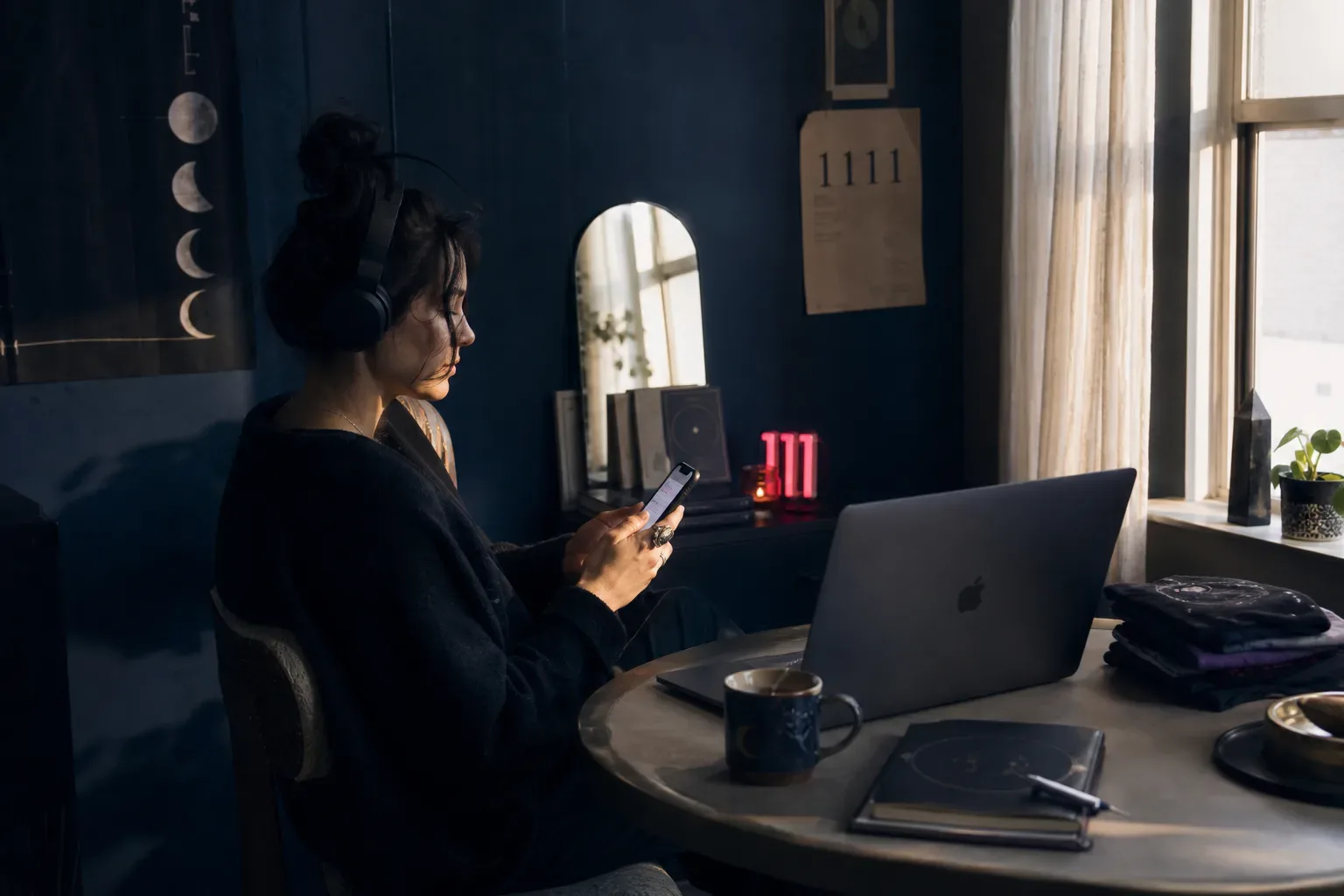
Your phone is warm in your hand. The post is ready, but your thumb won’t move. Fear of being seen is a protection pattern, not a character flaw. A 3-minute future-self audio helps by making visibility feel familiar, specific, and survivable before you take one small public action.
What is the fear of being seen really protecting?
Fear of being seen is often trying to protect you from social cost.
It can sound like wisdom. It says, “Wait until it’s better.” It says, “Don’t make people uncomfortable.” It says, “Who do you think you are?” Sometimes it arrives as perfectionism. Sometimes as sleepiness. Sometimes as a sudden need to reorganize every cable in the house. I have lost full afternoons to that one.
Psychologists call part of this the spotlight effect. In a 2000 study by Thomas Gilovich and colleagues, students wearing an embarrassing T-shirt guessed that 46% of people noticed it. The real number was closer to 23%. The mind doubled the room. It often does.
Fear of visibility can come from old data. A teacher laughed. A parent made your confidence look rude. A friend copied you. A workplace rewarded silence. The body remembers social danger quickly because belonging used to matter for survival. The National Institute of Mental Health estimates that about 7.1% of U.S. adults have social anxiety disorder in a given year, and many more carry smaller visibility fears without a diagnosis.
This fear is not proof that you should hide. It is proof that being seen once had consequences.
A good practice does not bully the fear. It gives it new evidence. Three minutes is not magic. It is 180 seconds of rehearsal, repeated often enough that your body stops treating every share, ask, photo, or introduction as a cliff.
Why use future-self audio instead of pushing harder?
Future-self audio works because the nervous system learns from repeated, believable rehearsal better than from force.
Pushing harder can work for one day. Then the cost arrives. You post, crash, avoid the comments, and call that visibility. Or you speak in the meeting, spend the night replaying your sentence, and decide not to do it again for 3 weeks. That isn’t weakness. That’s a practice with no recovery built in.
The audio gives you a different sequence: listen, feel, act, return. In mental practice research, rehearsal has measurable effects. A 1994 meta-analysis by Driskell, Copper, and Moran reviewed 35 studies and found that mental practice improved performance, especially when paired with physical practice. The point is simple: the brain responds to rehearsal when the rehearsal is clear.
The AYA Method is a daily audio manifestation practice. Each day you listen to a short personalized recording — your Dream-Self Moment — narrated from the version of you who has already manifested the life you intend. Listening is the practice. Repetition is the work. The audio is the method.
For fear of being seen, the Dream-Self Moment matters because it speaks from after the fear has softened. Not from fantasy. From a real-feeling future. You hear yourself having already sent the work, said the sentence, walked into the room, received attention, and stayed in your body.
Visibility is not becoming louder. Visibility is letting the true thing have a witness.
If you want the wider frame, the Manifestation pillar explains why imagined identity needs repeated contact, not wishful thinking. The practice is quiet. It asks for one listen. Then one small act.
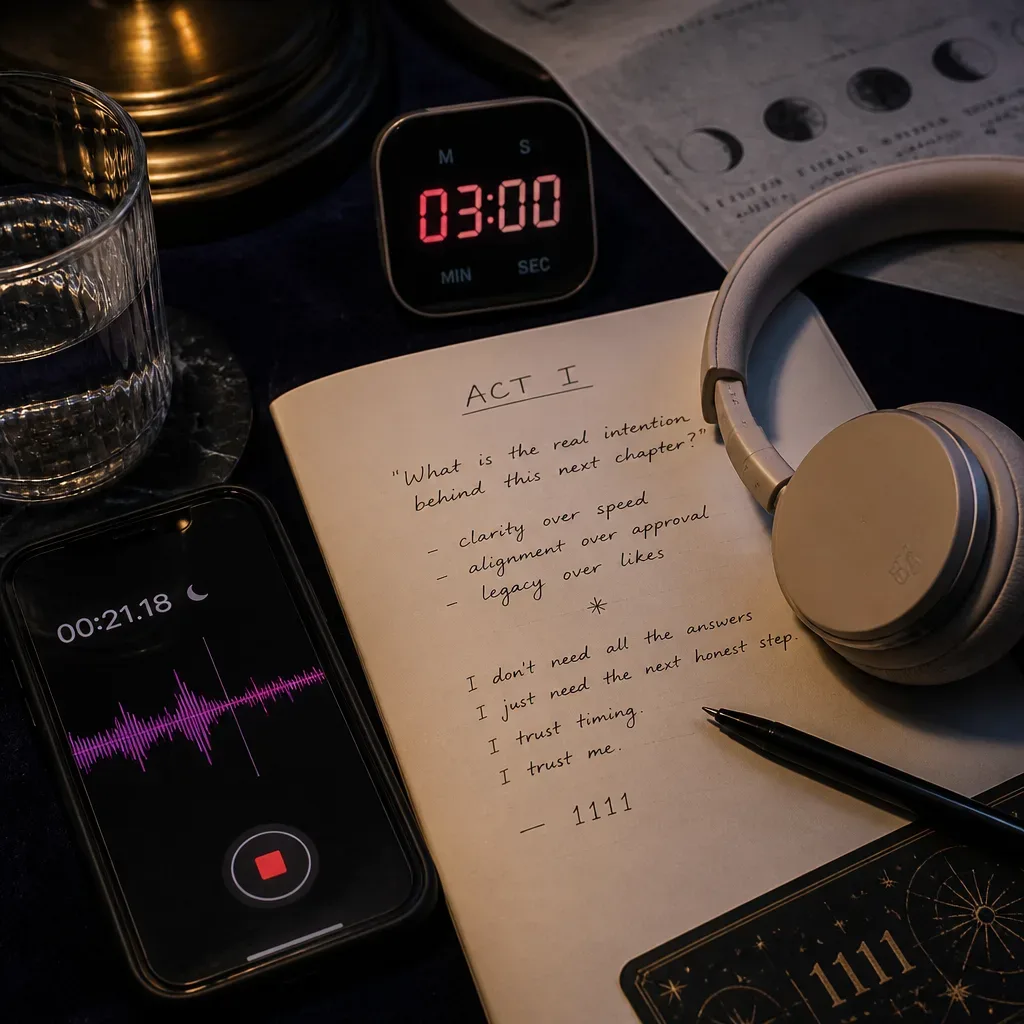
How do you make a 3-minute audio that feels safe enough to repeat?
Make the audio specific, short, and gentle enough that you can listen tomorrow.
Start with one visible act. Not your whole public life. Not “be known.” Choose something the body can understand: send the invoice, publish the paragraph, ask the client for the testimonial, raise your hand once, record the 30-second introduction. In behavior science, specificity matters. Peter Gollwitzer’s work on implementation intentions, summarized in 1999, found that “if-then” plans help people act because the cue is already chosen.
Use this 3-minute shape:
- First 30 seconds: arrive. Name the room, your breath, your feet, and the fact that you are safe enough right now.
- Next 60 seconds: speak as your future self. Use present tense. “I share the work before it is perfect. I let one good person find it.”
- Next 60 seconds: name the visible act. Say exactly what you do after the audio. No grand promise.
- Final 30 seconds: return to the body. Tell yourself what happens after: water, one breath, no checking for 10 minutes.
Keep the language plain. Your mind can reject a sentence that sounds too far away. “Everyone loves my work” may create resistance. “I can let three people read this draft” is more believable. A 2009 study by Lally and colleagues found that habit automaticity took a median of 66 days, with wide variation. Believability helps you stay with the practice long enough for repetition to matter.
Here is a simple script you can adapt:
I am here. My feet are on the floor. I can be seen and remain myself. I send the work as it is today. I do not need to explain my whole history. I let one true person receive it. After I press send, I drink water and come back to the room.
You do not need a perfect voice. You need a voice you can believe.
For more language support, the Affirmations pillar can help you keep statements clean, present-tense, and free of performance theater. In Aya, the daily affirmation is a complement. The audio remains the practice.
What should you do right after listening?
After listening, take one small visible action within five minutes.
The five-minute window is practical. It keeps the mind from building a courtroom. If you wait too long, the arguments multiply. “Maybe tomorrow” puts on a nice shirt and calls itself discernment. I know that shirt. I have worn it while holding a baby, checking email, and pretending a bass line from 2009 needed urgent attention.
Use a visibility ladder. The idea is common in exposure-based approaches for anxiety: start with a manageable step, repeat it, then move higher. The American Psychological Association describes exposure therapy as a supported way to reduce avoidance by facing feared situations gradually. You can borrow the shape here, gently, without turning your life into a test.
| Visibility level | Small act | Time needed |
|---|---|---|
| 1 | Save the draft where someone could see it later | 2 minutes |
| 2 | Send one honest update to a trusted person | 3 minutes |
| 3 | Ask one question in a meeting | 1 minute |
| 4 | Share one sentence of your work publicly | 5 minutes |
| 5 | Make a clear ask with your name attached | 10 minutes |
Choose the lowest step that still feels real. If the body says no to level 4, use level 2. Avoidance feeds on all-or-nothing thinking. Practice feeds on contact.
The action after the audio should be so small it almost disappoints your ego. Good. Small is repeatable. Repeatable is how a new self-image becomes less theatrical and more normal.
A visible life is built by small acts that your body survives.
How do you know the practice is working?
You know it’s working when recovery gets shorter and your visible acts become more ordinary.
Do not measure only applause, reach, replies, likes, sales, or praise. Those numbers can matter in business, but they are unstable mirrors. Pew Research Center reported in 2024 that about 83% of U.S. adults use YouTube and 47% use Instagram, which means attention is abundant in quantity and uneven in quality. A public response is not a clean measure of your courage.
Measure closer to the body. Did your breath return faster? Did you check the post 6 times instead of 26? Did you tell one friend the truth without making a joke to escape it? Did you sleep? Did you do the next rep the following day?
Try a 7-day tracking note:
- Day and time: When did you listen?
- Visible act: What did you do within five minutes?
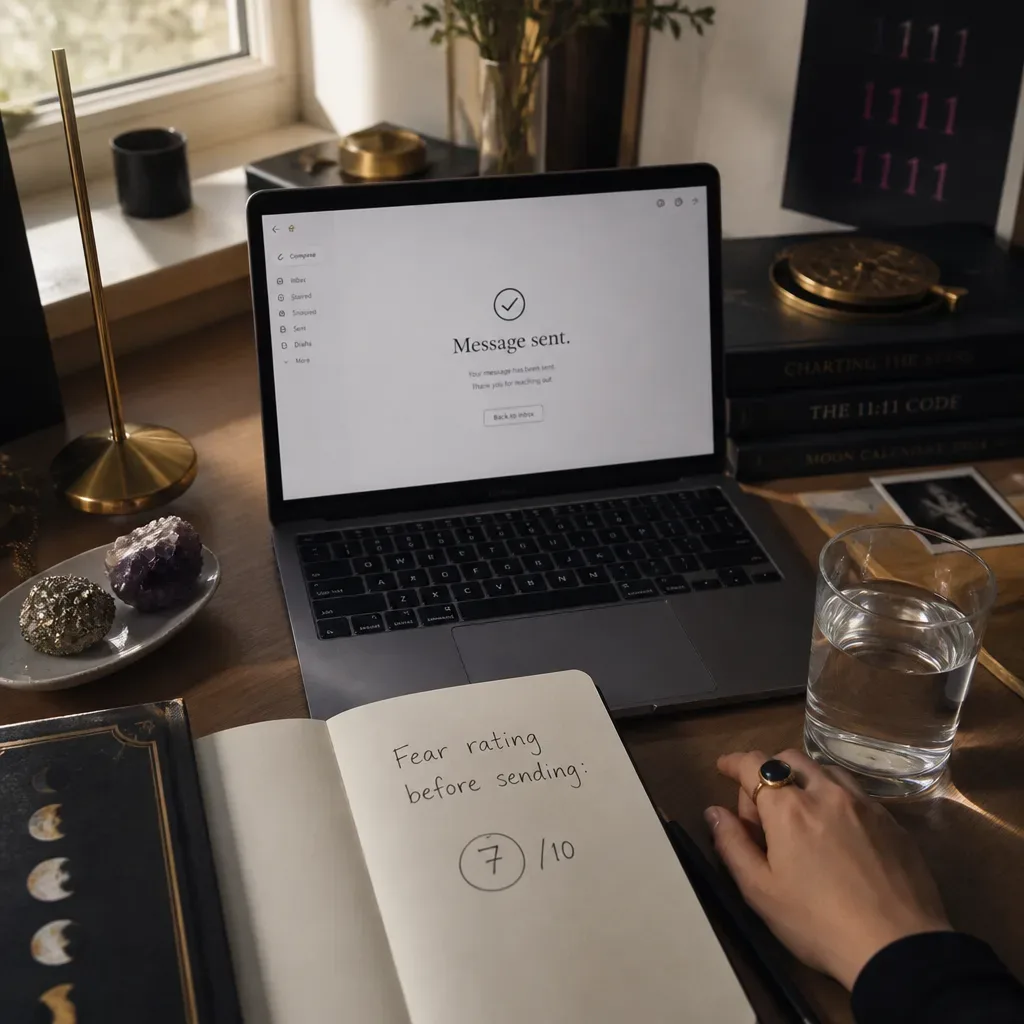
- Fear rating: 0 to 10 before, 0 to 10 after.
- Recovery time: How long until you felt mostly here again?
- Evidence: What actually happened?
Numbers are not cold when they help you stop lying to yourself. A fear rating of 8 becoming a 6 is not failure. It is information. In clinical settings, subjective units of distress, often rated 0 to 100, are used in exposure work to track change across repeated contact. Your 0 to 10 version is enough for daily life.
If timing helps you stay steady, Astrology and manifestation can be a reflective tool. Use it as a mirror, not a permission slip. The calendar can support you. It should not become another hiding place.
What if being seen brings criticism, silence, or envy?
Plan for ordinary social weather before you share, so it doesn’t become proof that hiding was safer.
Criticism can hurt. Silence can hurt in a sneakier way. Envy can make a good thing feel dirty. None of these mean you were wrong to be seen. They mean you entered contact with other people, and other people arrive with their own histories.
Before listening, decide what each response means. One critical comment means one person had a reaction. Silence for 24 hours means silence for 24 hours. A compliment means receive it without debt. A question means answer if you want to. This is not emotional numbness. It is clean interpretation.
Use a response plan:
- If criticism comes: wait 20 minutes before replying.
- If silence comes: do not delete for 24 hours unless there is a real safety issue.
- If praise comes: say “thank you” without shrinking the work.
- If envy appears: do not hand over your direction to manage someone else’s discomfort.
- If fear spikes: listen again, then do one grounding action.
The 20-minute pause is not sacred science, but it is useful. Emotion researchers often describe emotional responses as waves that shift with time, especially when you don’t feed them with rumination. A 2011 study in the journal Emotion found that labeling emotions can reduce amygdala activity in some contexts. Naming “shame,” “fear,” or “anger” may help you stay present.
You cannot control how being seen lands in another person’s life. You can control whether you abandon yourself afterward.
This is where a Manifestation Board can help as a complement. A visual reminder of the work, the audience, and the next brave ordinary act can steady the room. But it is not the core practice. The audio is where you return each day.
How can you keep going without making visibility your whole identity?
Keep the practice small, daily, and tied to service rather than performance.
Visibility becomes heavy when it turns into a second self you must maintain. You are not building a statue. You are letting the right people see enough to meet you, hire you, learn from you, love you, or leave you alone. All are useful outcomes.
Set a 14-day practice. Long enough to gather data. Short enough that your mind doesn’t panic. Lally’s 2009 habit study showed wide variation, from 18 to 254 days for automaticity, so 14 days is not meant to finish the work. It is meant to begin a relationship with repetition.
Here is the quiet rule: listen first, act small, recover on purpose. If the day is loud, listen while sitting on the edge of the bed. If the children are shouting, use headphones. If you miss a day, don’t make a moral case out of it. Return the next day. I have built most good things in my life after a missed day.
The AYA Method gives this practice a home because it keeps the center simple: the Dream-Self Moment, heard daily. If you want language for belief, use the affirmation feature. If you want a visual cue, use the board. But when fear of being seen rises, press play before you negotiate with it.
Your work does not need a louder you. It needs the real you, returning often enough to be found.
Leave the room a little more visible than you entered it.