manifestation 101
Whisper Method Manifestation vs Future-Self Audio
Whisper method manifestation uses imagined speech. See how future-self audio makes the same intention quieter, repeatable, and easier to practice daily.

A phone rests face down on the nightstand. Whisper method manifestation can be a useful mental rehearsal, but future-self audio is steadier: you hear the desired self in the same words each day, so the practice becomes less about performing belief and more about returning to one clear cue.
What is whisper method manifestation, really?
Whisper method manifestation is a visualization practice where you imagine placing an intention into someone else’s ear through quiet, repeated speech.
The usual version is simple. You picture a person. You move close in your mind. You whisper the thing you want them to think, say, or notice, often 3 times. Some people use it for a text message. Some use it for an apology. Some use it for being chosen, remembered, or seen. The number 3 shows up often because repetition gives the scene a beginning, middle, and end.
What matters here is not the drama of the whisper. It is attention. Cognitive psychology has studied mental imagery for decades; a 2010 review in Psychological Bulletin found that mental practice can improve performance, especially when paired with physical action. That does not mean you can make another person behave. It means the mind rehearses what the body may begin to treat as familiar.
This is where the whisper method gets tender, and a little risky. If your whole practice depends on someone else changing, you may start using hope as a way to avoid your own next move. A ritual can calm you, but it should not make you smaller. The cleanest form of manifestation keeps the focus on who you are becoming, not on who must obey the scene.
A whisper is a spark; a recording is a room you can return to.
For some people, whisper method manifestation works because it creates a small private script. For others, it becomes a loop. The difference is usually not belief. It is structure. A practice needs somewhere to land.
How is future-self audio different from the whisper method?
Future-self audio changes the center of the practice from influencing someone else to listening to the self you are choosing to become.
With whisper method manifestation, you generate the whole scene in real time. That can be beautiful. It can also be fragile. If you are tired, anxious, or annoyed, the scene changes. The words shift. The person in the scene becomes too important. Future-self audio gives you a stable script. You press play. You listen. You do not have to invent the practice again.
The AYA Method is a daily audio manifestation practice. Each day you listen to a short personalized recording — your Dream-Self Moment — narrated from the version of you who has already manifested the life you intend. Listening is the practice. Repetition is the work. The audio is the method.
That matters because repetition is one of the few mystical-sounding things that psychology actually recognizes. In 1999, psychologist Peter Gollwitzer’s work on implementation intentions showed that specific cues, often framed as if-then plans, can make action more likely. A daily recording is not an if-then plan by itself, but it can become the cue that reminds you what kind of action belongs to the person you say you are.
| Practice | Main action | Best use | Quiet risk |
|---|---|---|---|
| Whisper method manifestation | Imagine whispering a desired thought | Short emotional reset | Fixating on another person |
| Future-self audio | Listen to your Dream-Self Moment | Daily identity rehearsal | Expecting the audio to replace action |
| Written affirmation | Repeat one sentence | Fast focus | Saying words you do not believe |
| Visual board | See symbolic cues | Remembering direction | Collecting images without practice |
If a practice makes you perform hope for the internet, it has already become too loud.
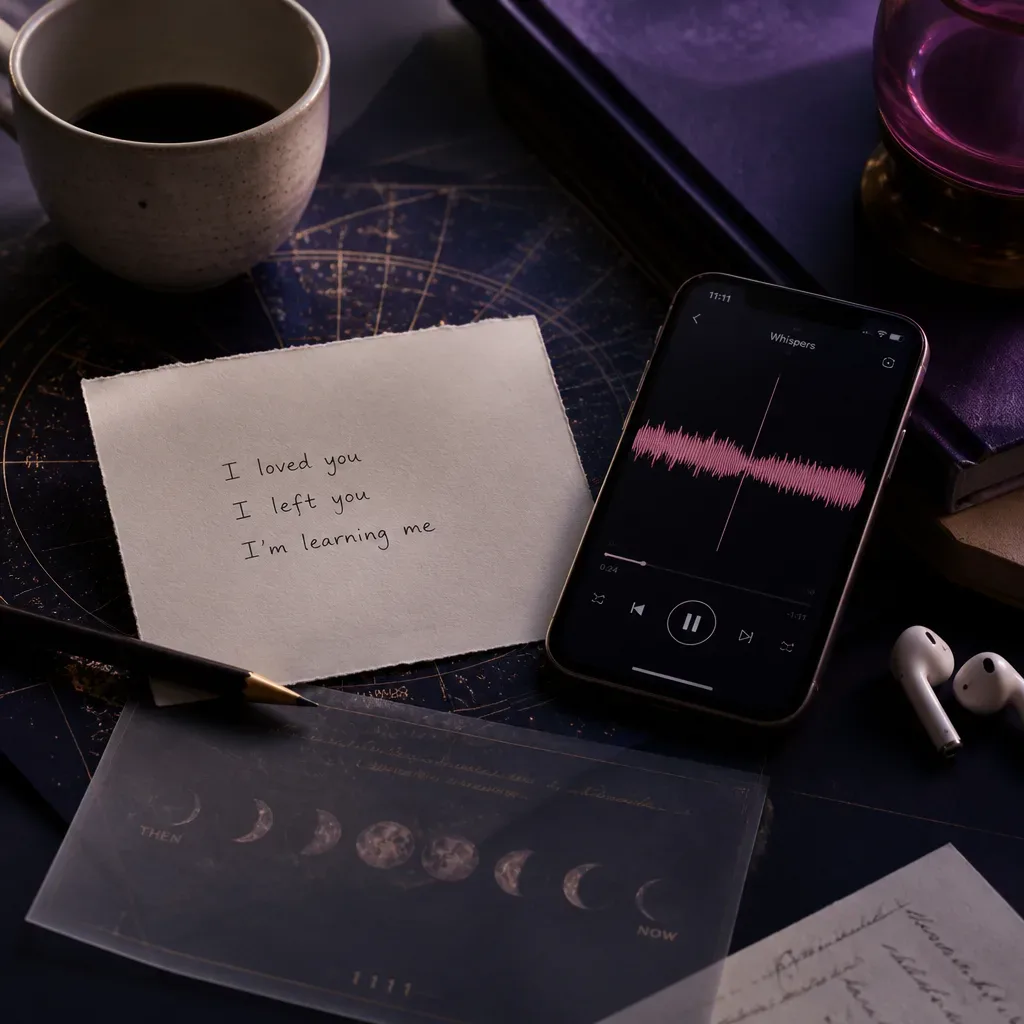
Why might audio feel more believable than a whispered visualization?
Audio can feel more believable because it removes the strain of producing the right image on command.
Not everyone visualizes clearly. A 2015 paper on aphantasia by Adam Zeman and colleagues described people who report little or no voluntary visual imagery. Even among people who can picture things, inner scenes can blur under stress. If a method depends on seeing a face, a room, and a perfect emotional tone, it may fail on the very days you need softness most.
Sound asks less. You can listen with your eyes closed. You can listen while walking to the kettle. You can listen before opening messages. Dr. Andrew Huberman has often discussed the role of repetition and nervous system state in learning; while his lab is not studying manifestation as a claim, the broader point is useful. The brain learns through repeated cues, especially when the cue is paired with attention and feeling.
There is also something intimate about hearing words addressed to you. In small studies on self-affirmation, including research discussed in the Journal of Behavioral Medicine, values-based statements have been linked with reduced defensiveness and better follow-through in some health contexts. The effect is not magic. It is a small opening. You remember what you care about before the old reaction takes over.
Future-self audio keeps the ritual private, repeatable, and kind.
Whisper method manifestation often asks you to lean toward another person. Future-self audio asks you to lean toward the version of you who is already living differently. That difference may sound small. It is not. One keeps checking the outside. One teaches you to recognize yourself.
How do you compare them without turning practice into pressure?
Compare them by asking what each method asks of your attention, your agency, and your daily life.
Here is the quiet test I use when I interview people about intention setting. I ask what the practice helps them do after it is over. Not what it makes them feel for 90 seconds. Not whether it seems pretty. After. Does it help you send the email, leave the room, drink water, say no, apply, rest, repair, begin again? A manifestation practice that never touches behavior is only a mood with candles.
Try this 5-part comparison before choosing your practice:
- Name the object. Is your desire about your own state, or another person’s response?
- Check the repeatability. Could you do this on an ordinary Tuesday in 4 minutes?
- Watch the after-effect. Do you feel clearer, or more hungry for signs?
- Look for one action. What becomes easier to do in the next 24 hours?
- Keep the ritual small. If it needs 12 rules, it may be hiding fear.
The number matters less than the return. James Clear popularized the idea that habits are built through repeated cues, but behavior scientists were studying cue-response loops long before bestselling habit books. A 2020 review in Health Psychology Review noted that habit strength tends to grow with consistent context and repetition over time. Listening to the same future-self cue daily gives the mind a familiar place to begin.
The mind rehearses what the body may begin to treat as familiar.
Whisper method manifestation can still be useful if it calms the noise and brings you back to choice. The trouble starts when it becomes surveillance. Did they text? Did they think of me? Did the whisper work? That is not practice anymore. That is checking a locked door every 8 minutes.
Where do affirmations and visual cues fit here?
Affirmations and visual cues can support the practice, but they should not replace the daily audio.
A good affirmation is short enough to remember when you are not being impressive. One sentence. Maybe 8 to 12 words. The problem is not affirmations themselves; it is using them as a mask. In a 2009 Psychological Science study, Joanne Wood and colleagues found that very positive self-statements could make some people with low self-esteem feel worse. That does not mean affirmations are bad. It means the sentence has to be close enough to touch.
The affirmations side of the practice works best when it echoes what you have already heard in the audio. It is a small note in the pocket. Not the whole song. If your Dream-Self Moment says, I handle the next thing calmly, the daily affirmation might be, I can do the next small thing. True enough. Near enough.
Visual cues have their own place. I am a vision-board purist, which is embarrassing only because so many of my teenage magazine cutouts became actual rooms, outfits, and train tickets. Still, I trust a board only when it points back to lived choice. A photo is not a promise. It is a reminder.
Helpful complements include:
- one affirmation that sounds like you
- one image that points to a real behavior
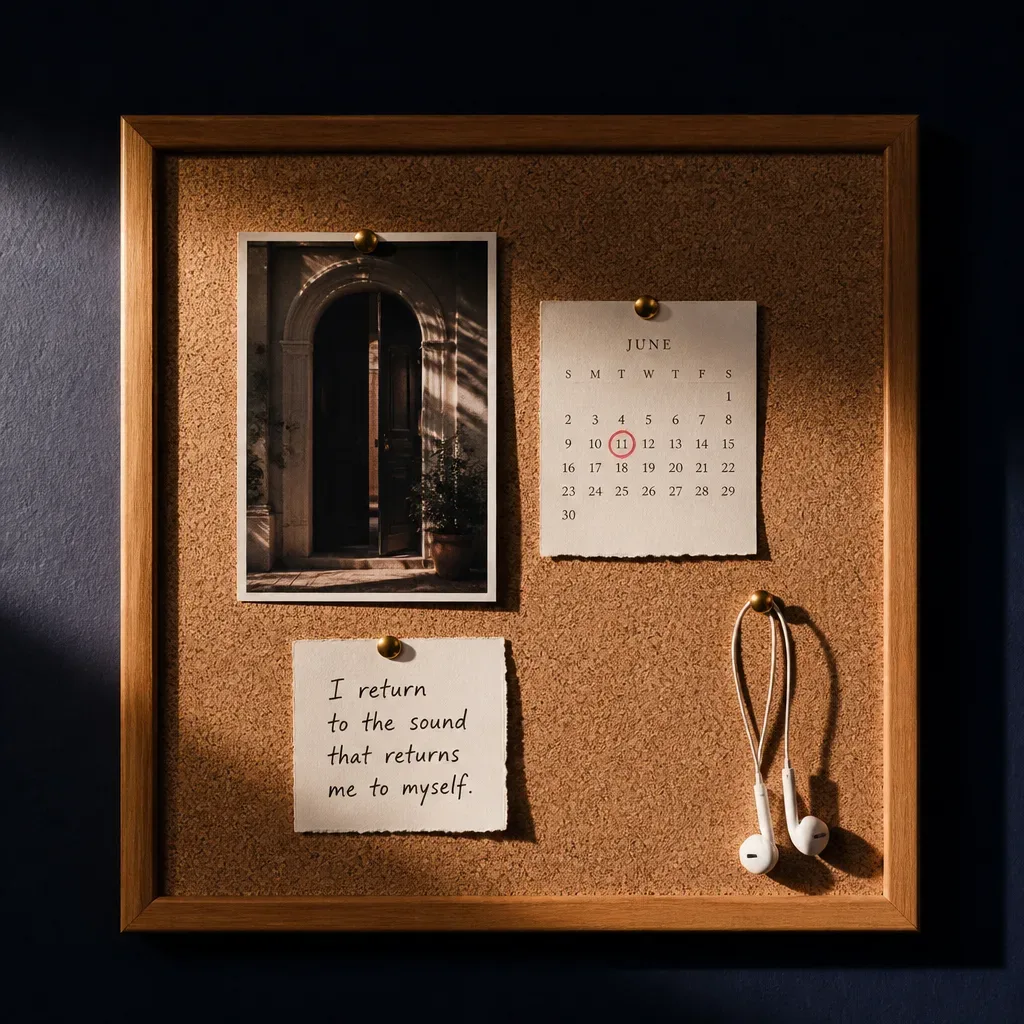
- one calendar cue for listening
- one small action within 24 hours
- one weekly edit, so the practice stays honest
The app also includes a daily affirmation and a Manifestation Board, but the audio stays central. Listening is not decoration. It is the method.
When should you use whisper method manifestation instead?
Use whisper method manifestation when you need a brief emotional reset, not when you are trying to build a daily identity practice.
There are moments when the whisper method has a place. You are lying awake. You want to soften anger before a conversation. You want to remember the sentence you wish you could say without shaking. In that case, whispering in your mind can be a way to rehearse gentleness. Keep it about your own clarity. Let the other person remain free.
It may also help if you like symbolic timing. Some readers pair rituals with moon phases, birth charts, or seasonal thresholds. If that is you, keep the symbol grounded. The point of astrology and manifestation is not to hand your life to a chart. It is to notice timing, pattern, and the questions you are ready to ask.
Still, for a daily practice, future-self audio is usually cleaner. You do not have to decide who to whisper to. You do not have to wonder whether you did it correctly. You listen to the Dream-Self Moment, then you take the next ordinary step. Research on mental rehearsal in sport often shows the best results when imagery is paired with physical practice; one 2010 review found stronger effects when mental and physical rehearsal worked together than when imagery stood alone.
So use whisper method manifestation like a match. Use future-self audio like a lamp.
The quiet rule is this: if the practice gives you back to yourself, keep it. If it makes you chase, pause.
What is the simplest way to try future-self audio this week?
The simplest way is to listen once a day for 7 days and pair the audio with one small action.
Do not rebuild your whole morning for this. Do not buy a new notebook unless you love buying notebooks, in which case I see you. Choose a time that already exists: after brushing your teeth, before coffee, on a walk, or before the first message. Keep it boring enough to repeat. The University College London habit study often cited in behavior writing found that habit formation averaged 66 days, with wide variation. Seven days is not a full habit. It is a fair first sample.
Here is a quiet 7-day test:
- Listen to your Dream-Self Moment at the same time each day.
- Write one sentence you remember from it.
- Choose one action that fits that sentence.
- Do the action within 24 hours.
- Notice what feels easier by day 7.
If you already study manifestation, this keeps the practice from becoming foggy. If you are newer, it keeps you from needing a perfect belief system before you begin. You do not have to feel certain. You have to return.
A practice becomes real when it survives your ordinary day.
There is room for the whisper method. There is room for cards, moons, boards, and one-line prayers said while the kettle clicks. But if you are choosing one anchor, choose the one that can meet you every day in the same voice. Choose the thing you can hear when your own thoughts are tired.
Softly, you return to the voice that already knows you.