sleep science
90 Minute Sleep Cycle: When to Play Dream-Self Audio
Use the 90 minute sleep cycle to time Dream-Self audio before sleep, during night waking, or on cue in the morning without disrupting rest.
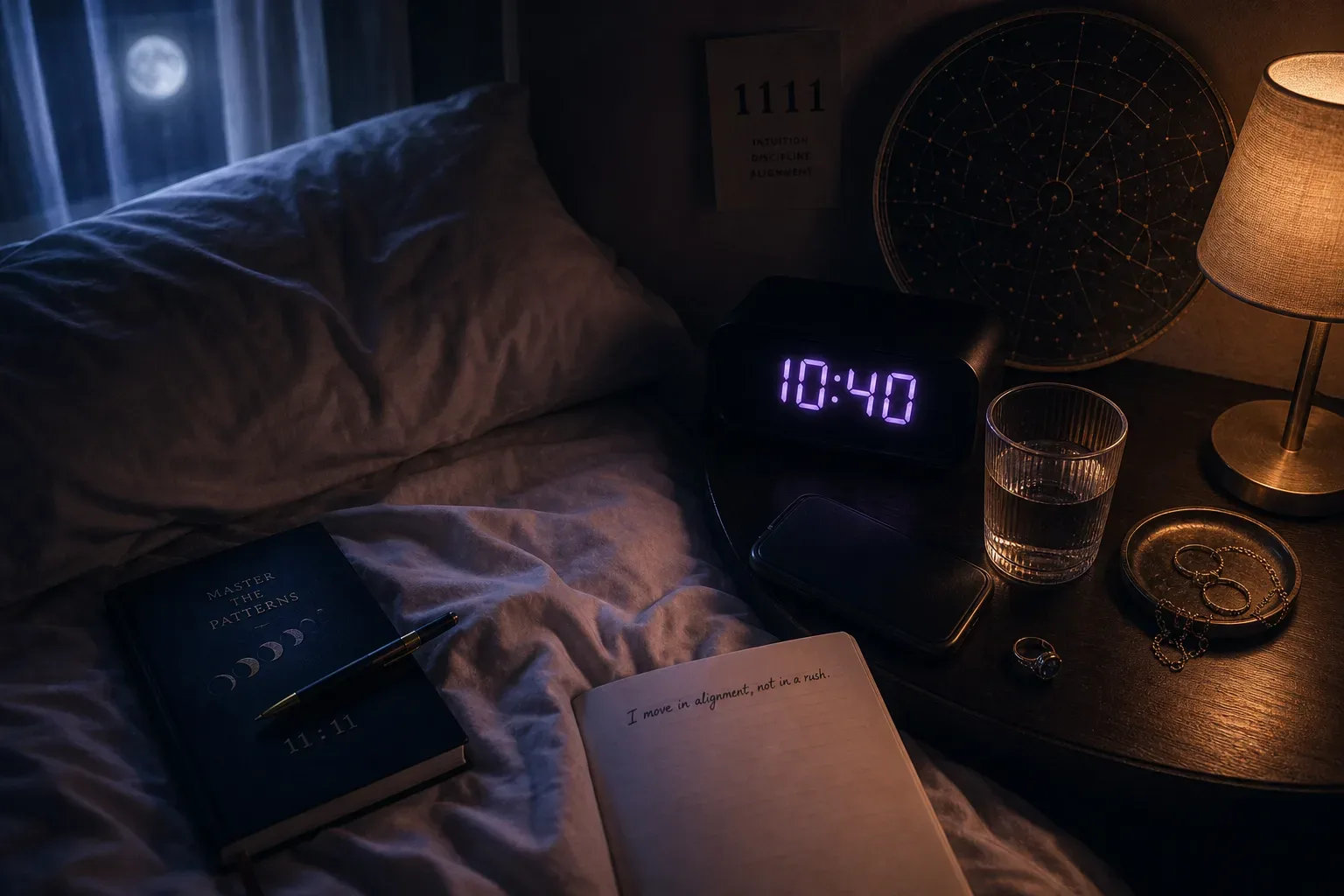
The 90 minute sleep cycle is a useful timing tool for Dream-Self audio: play it once before sleep, ideally 10 to 20 minutes before lights out, or during a calm natural waking between cycles. Do not sacrifice sleep to chase a mystical window. The signal works better when the body is rested.
What does the 90 minute sleep cycle actually mean?
The 90 minute sleep cycle is an average pattern in which the brain moves through light sleep, deep sleep, and REM sleep before beginning the next cycle.
Sleep is not one flat state. The National Institute of Neurological Disorders and Stroke describes sleep as a sequence of non-REM and REM stages, repeating about every 90 minutes across the night. In a typical 7.5-hour sleep window, that gives you about 5 full cycles. Some nights arrive neatly. Others arrive like a toddler with a spoon at 5:42 a.m.
The number matters because timing affects how you feel when you wake. Waking from deep sleep can leave you foggy, while waking closer to the end of a cycle often feels cleaner. Research using polysomnography has long shown that the first half of the night carries more slow-wave sleep, while REM gets longer toward morning. The dial changes after midnight.
A sleep cycle is a tide, not a stopwatch. The common 90-minute rule is useful because it gives you a planning frame, but actual cycles can run closer to 80 or 110 minutes. The American Academy of Sleep Medicine and Sleep Research Society recommend at least 7 hours of sleep for most adults, which means the practice should serve sleep, not steal from it.
For Dream-Self audio, the point is simple: place the recording where your mind can receive it without turning bedtime into a performance review. If you use the AYA Method, you already know the spine of the practice: The AYA Method is a daily audio manifestation practice. Each day you listen to a short personalized recording, your Dream-Self Moment, narrated from the version of you who has already manifested the life you intend. Listening is the practice. Repetition is the work. The audio is the method.
When should you play Dream-Self audio before bed?
Play Dream-Self audio once during the last quiet minutes before sleep, with enough buffer that you are not staring at the ceiling waiting to become someone else.
For most people, that means 10 to 20 minutes before lights out. Sleep researchers call the time it takes to fall asleep sleep latency; in clinical sleep medicine, roughly 10 to 20 minutes is often treated as a normal range for adults. If you fall asleep in 2 minutes every night, your body may be under-rested. If you need 60 minutes, the issue is probably not your manifestation practice.
Here is the simple way to time it:
- Choose the wake time you actually need.
- Count back in 90-minute blocks: 6 hours, 7.5 hours, or 9 hours.
- Add 10 to 20 minutes before that for falling asleep.
- Play your Dream-Self audio before the buffer begins.
- Put the screen away before your brain starts negotiating.
If your alarm is set for 6:30 a.m., a 7.5-hour sleep plan points to sleep at 11:00 p.m. Add a 15-minute buffer and your lights-out target becomes 10:45 p.m. Your Dream-Self audio belongs around 10:35 to 10:40 p.m., not at 11:17 while you are checking the weather, messages, and the one email that can absolutely wait.
The audio is not a spell you squeeze into sleep; it is a signal you repeat until the nervous system recognizes the room. Joe Dispenza often writes about rehearsal and mental state, while clinical psychology has studied imagery rehearsal for decades, especially in nightmare treatment. The mechanisms are debated, but repetition paired with emotion is not a strange idea. Athletes have used mental imagery for performance since at least the 1970s.
The cleaner rule: listen before your final descent, not after you are already annoyed.
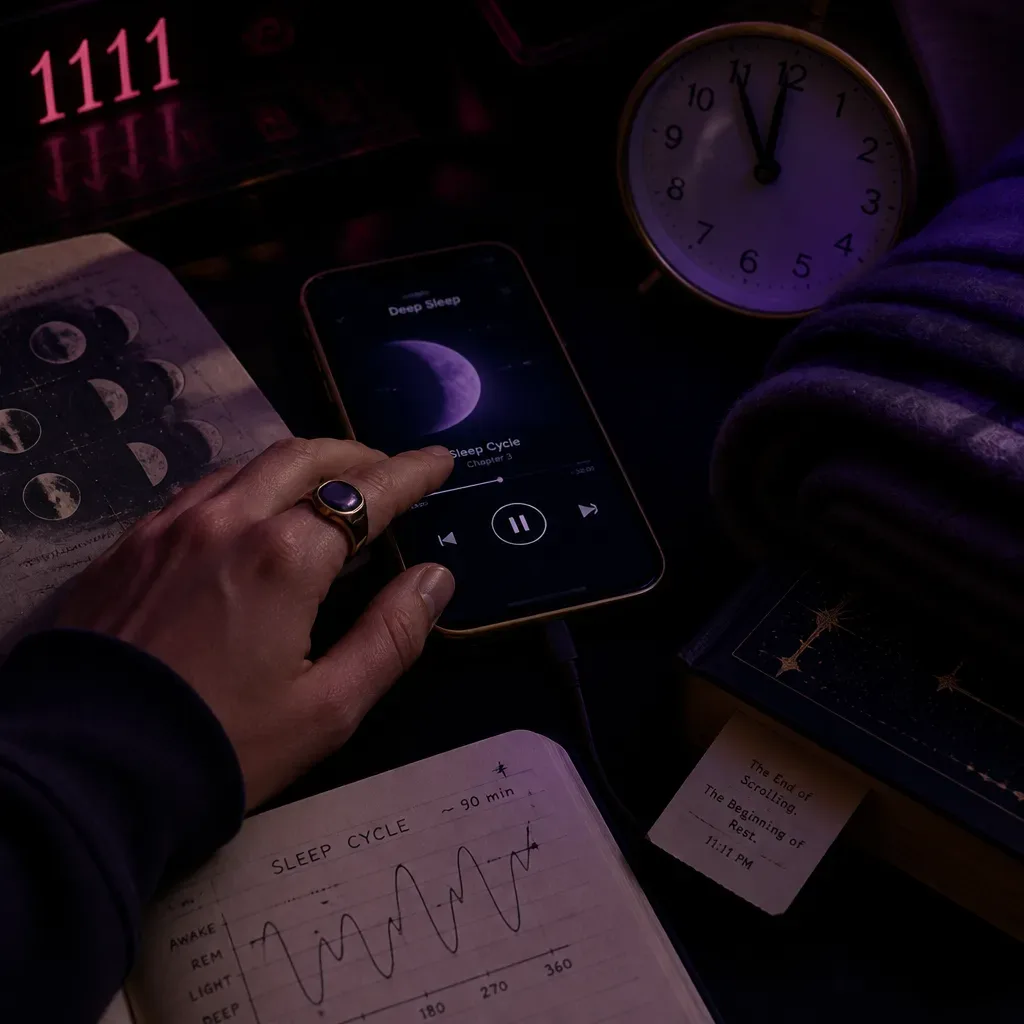
Should you use the audio before bed, during the night, or in the morning?
Use bedtime as the default, night waking as optional, and morning listening as the safety net when the night gets messy.
There is no prize for doing the practice at the most dramatic hour. Yes, 3:33 a.m. has a certain cinematic confidence. Yes, 11:11 on the lock screen can feel like the room just raised an eyebrow. But the method gets stronger through daily repetition, not through theatrical timing. The Manifestation pillar makes the same point from another door: intention needs form, or it stays decorative.
Use this comparison when choosing your window:
| Timing window | Best for | Watch for | Practical note |
|---|---|---|---|
| 20 minutes before bed | Most people | Scrolling after listening | Strong default for consistency |
| Calm night waking | Light sleepers who wake naturally | Becoming alert | Keep volume low and screen dark |
| Morning after waking | Parents, shift workers, disrupted nights | Rushing | Pair with first drink or shower |
| Afternoon reset | Burnout recovery days | Turning it into avoidance | Use once, then return to the next task |
A 2019 Pew Research Center report found that 28% of U.S. adults said they are online almost constantly. That number matters at bedtime because your device can become the gate or the trap. If the Dream-Self audio lives on your phone, set it up before the final hour. Do not make future-you compete with group chat at 10:58 p.m.
I listen to my Dream-Self Moment most mornings when the night breaks apart. That is the mother-of-one clause. The streak survives because I do not ask it to be beautiful. On hard weeks, the practice has happened in a parked car, in 90 seconds of quiet, or while the kettle clicked itself off. The practice counts when it is listened to, not when it is performed perfectly.
If you also use the Affirmations pillar, keep the hierarchy clean. The daily affirmation can name the signal in one sentence. The Manifestation Board can give it a visual anchor. But in the AYA Method, the audio holds the center.
How do you match the 90 minute sleep cycle to your real bedtime?
Match the 90 minute sleep cycle to the life you have first, then refine the timing after 7 nights of evidence.
Start with your fixed point. For most adults, that is the morning alarm. The Centers for Disease Control and Prevention has reported that about 1 in 3 U.S. adults do not get enough sleep, using 7 hours as the minimum benchmark. So before we get poetic about REM, count the hours honestly. If the schedule only allows 5.5 hours, your first manifestation may be a boundary.
Use this quick planning chart:
| Wake time | 6-hour sleep target | 7.5-hour sleep target | 9-hour sleep target |
|---|---|---|---|
| 5:30 a.m. | 11:30 p.m. | 10:00 p.m. | 8:30 p.m. |
| 6:00 a.m. | 12:00 a.m. | 10:30 p.m. | 9:00 p.m. |
| 6:30 a.m. | 12:30 a.m. | 11:00 p.m. | 9:30 p.m. |
| 7:00 a.m. | 1:00 a.m. | 11:30 p.m. | 10:00 p.m. |
Now add your sleep-latency buffer. If you want to be asleep at 11:00 p.m., get into bed earlier and play your audio before the final drop. This is where most routines fail: they plan for sleep as if the body were a light switch. It is not. It is a system with temperature, light exposure, caffeine half-life, stress hormones, and the strange memory of a sentence your manager used at 4:12 p.m.
Dr. Andrew Huberman has popularized morning light exposure as a circadian anchor, and the underlying idea is well supported: light is one of the strongest cues for the suprachiasmatic nucleus, the brain’s central clock. Evening light, especially bright light, can delay melatonin. Your Dream-Self audio may be short, but the glowing rectangle around it has opinions.
If 11:11 is punctuation, bedtime is grammar. The sign may catch your eye, but the structure carries the sentence.
What setup keeps Dream-Self audio from disrupting sleep?
The best setup is low-friction, low-light, and boring enough that your nervous system does not treat it as an event.
Use a speaker if earbuds make you aware of your ears. Use one earbud if a speaker wakes someone else. Keep the volume just high enough to hear the narration without effort. The World Health Organization has warned about unsafe listening levels, especially through headphones; while bedtime audio is usually quiet, the principle holds. Softer is usually wiser.
A good sleep setup has 4 parts:
- Preloaded audio: open the recording before you start the bedtime routine.
- Low light: reduce screen brightness or use audio controls from the lock screen.
- Clear ending: let the recording finish once; avoid looping unless your clinician has recommended audio for another reason.
- No negotiation: decide before bed whether tonight is a bedtime listen, morning listen, or skipped-and-returned-to-tomorrow listen.
The no-loop rule matters. A short Dream-Self Moment can be a cue. A 6-hour loop can become stimulation, especially if the narration contains emotionally charged detail. Sleep medicine often uses consistent cues, but it also protects sleep continuity. The AASM has noted that insomnia treatment often focuses on stimulus control: bed should be associated with sleep, not effort.
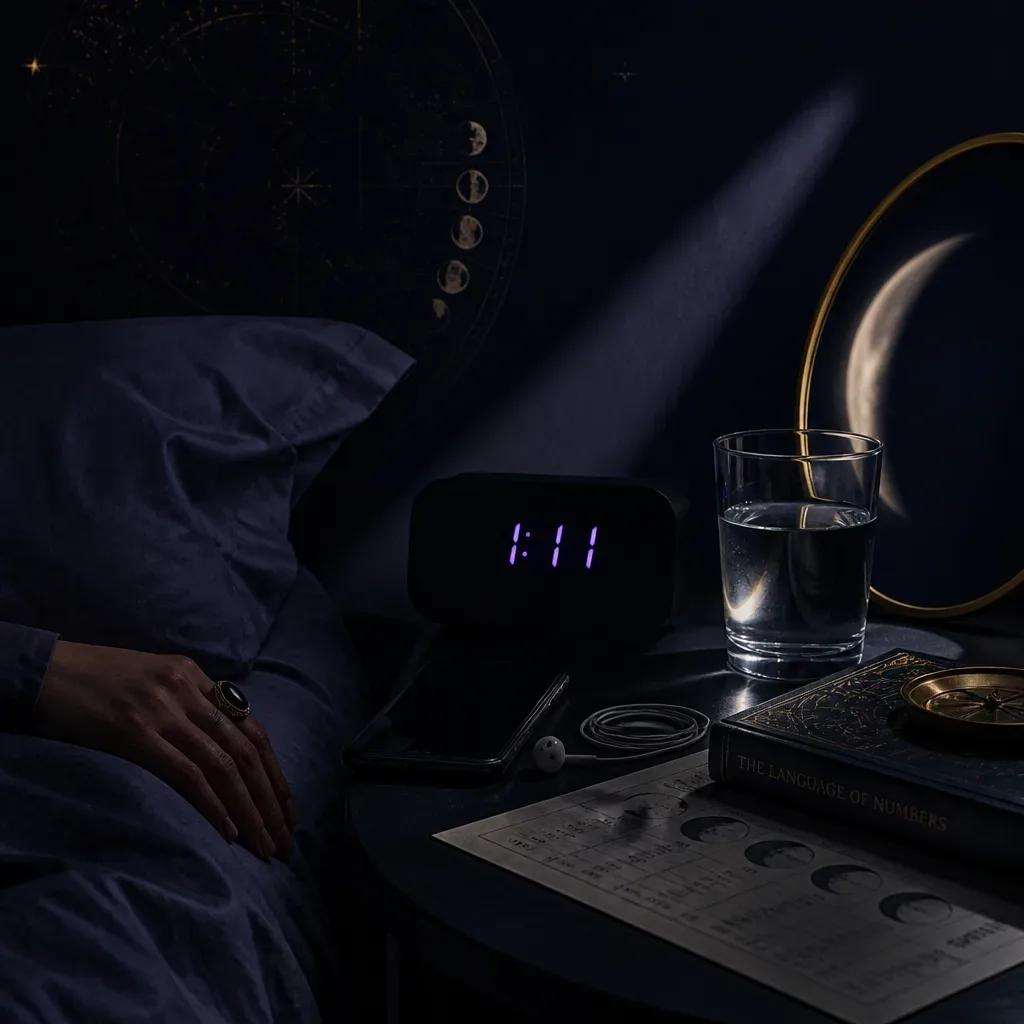
This is also where Astrology and manifestation can be useful as a calendar, not a command center. A new moon, a Mercury station, or a personal 11 day can help you name a cycle. It should not bully you into staying awake past the point where your body is asking for mercy.
The cleaner the setup, the less willpower it costs. That matters because willpower is notoriously unstable at night; in one large 2018 review, sleep loss was associated with poorer emotional regulation and cognitive control. Your 10:46 p.m. self deserves fewer choices, not a sacred obstacle course.
What if you wake up between sleep cycles?
If you wake calmly between cycles, you may play the audio once, but if the waking carries anxiety, choose sleep recovery over practice intensity.
Natural wakings are common. Many adults wake briefly between cycles and forget it by morning. The trouble begins when the waking becomes a meeting: What time is it? Why am I awake? Did I ruin tomorrow? Should I fix my entire identity before 4 a.m.? No. The room does not need a committee.
If you wake and feel neutral, use this 3-part check:
- Body: Is my breathing steady and my jaw soft?
- Mind: Can I listen without analyzing every sentence?
- Clock: Can I avoid checking the exact time?
If the answer is yes, play the audio at the lowest comfortable volume, once. If the answer is no, do not force it. Tara Brach’s work on mindful presence often returns to a simple move: notice, allow, return. That is enough at night. You are not less devoted because you protected sleep.
This is where the Manifestation pillar and Affirmations pillar meet practical biology. A single quiet sentence may be better than audio at 3 a.m. For example: I return to the version of me I have already named. Say it once. Then stop performing.
There is a reason sleep clinicians track sleep efficiency, not spiritual enthusiasm. In cognitive behavioral therapy for insomnia, often called CBT-I, people monitor time in bed, wake time, and sleep quality over days or weeks. The pattern matters more than one symbolic night. Your nervous system believes repetition. It also believes rest.
How should you track whether the timing is working?
Track 4 simple numbers for 7 mornings, then adjust your audio timing by pattern rather than mood.
Do not build a spreadsheet with 19 tabs unless spreadsheets calm you down. The useful data is small: bedtime, audio time, estimated sleep time, and how rested you feel from 1 to 5. Seven days gives you enough signal to notice whether bedtime listening helps, whether morning listening is more reliable, or whether the phone itself is the problem.
Here is the tracking format I use when life is not pretending to be ideal:
| Date | Audio time | Lights out | Wake time | Rest score 1-5 |
|---|---|---|---|---|
| Mon | 10:38 p.m. | 10:49 p.m. | 6:18 a.m. | 4 |
| Tue | 6:42 a.m. | 11:22 p.m. | 6:07 a.m. | 3 |
| Wed | 10:15 p.m. | 10:31 p.m. | 5:58 a.m. | 5 |
After 7 days, look for one useful truth. Not ten. If bedtime audio is followed by better rest at least 4 out of 7 nights, keep it. If it makes you alert 3 or more nights, move it earlier. If mornings are the only reliable gate, claim mornings without guilt. The AYA Method is daily audio practice, not a courtroom.
Specificity is kinder than intensity. A timed practice gives the mind a place to return, the way a master number gives the eye a place to pause. That is why a simple 90 minute sleep cycle plan works: it respects the body’s cycles while giving the intention a regular address.
The dial is already turning. Meet it quietly.