aya method deep dive
Aya Method Practice: Week One Dream-Self Audio Plan
A quiet 7-day aya method practice plan for listening to your Dream-Self Moment, building repetition, and keeping the first week small.
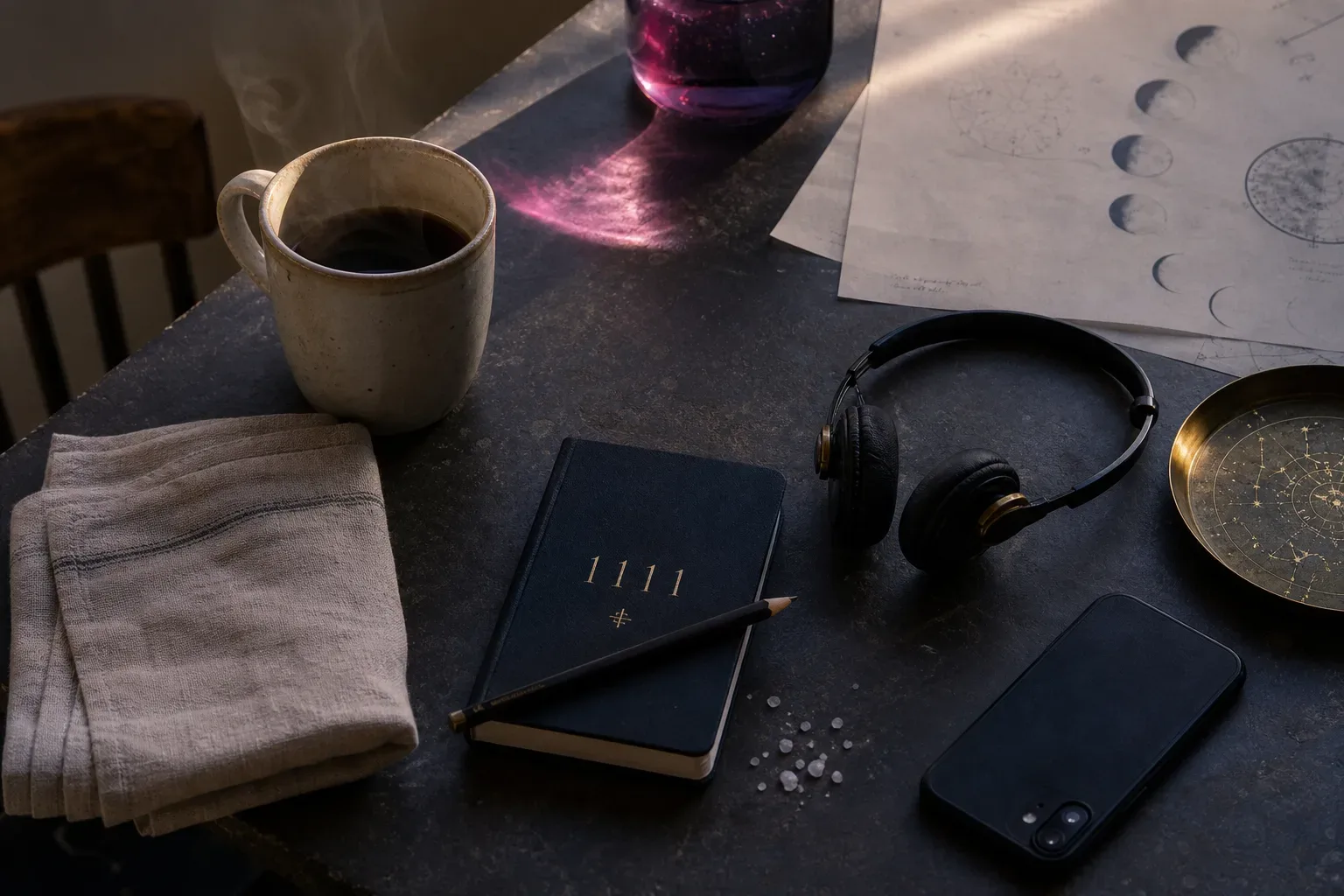
The cup is still warm in your hand. An aya method practice in week one is simple: listen to your Dream-Self Moment once a day for seven days, then notice one small way your day responds. No extra hour. No perfect mood. The first week is for repetition, not performance.
What is the AYA Method, exactly?
The AYA Method is a daily audio manifestation practice built around listening to your future self in a short, repeated recording.
The AYA Method is a daily audio manifestation practice. Each day you listen to a short personalized recording — your Dream-Self Moment — narrated from the version of you who has already manifested the life you intend. Listening is the practice. Repetition is the work. The audio is the method.
That definition matters because it keeps the first week clean. You are not trying to manage a dozen rituals before breakfast. You are not making a board, writing three pages, and testing whether you feel different by lunch. You are listening. One recording. One day at a time.
In behavior science, small repeated actions tend to hold better than dramatic starts. In a 2009 study in the European Journal of Social Psychology, Phillippa Lally and colleagues found that habit formation took a median of 66 days, with a wide range from 18 to 254 days. Week one is not where the whole change finishes. It is where the cue begins to know your name.
Think of it like seasoning beans. My grandmother never added all the salt at once. She returned to the pot. Tasted. Waited. Returned again. A future self can be heard the same way. Not as a command. As something that becomes familiar through contact.
A practice becomes real when it has a place to land.
If you want the wider frame, the Manifestation pillar explains how intention, attention, and repeated identity cues work together. But for this seven-day plan, keep your hands empty. Press play. Listen.
How do you prepare for the first seven days?
You prepare by making the practice too small to avoid and too specific to forget.
Choose one listening window you can repeat for seven days. It can be after brushing your teeth, before your first message, after lunch, or when the house gets quiet. The time matters less than the pairing. Researchers often call this a cue-based habit: one action follows another. The British Journal of General Practice reported in 2012 that simple implementation intentions, such as “after I do X, I will do Y,” can improve follow-through across health behaviors.
Do not choose your most ideal self’s schedule. Choose your real one. If you have children, a late shift, a shared room, or a nervous dog, be honest. The method does not need a candlelit room. It needs a repeatable doorway.
Here is a quiet setup for week one:
- Put your headphones where you will see them.
- Choose a 3-to-7-minute window.
- Decide whether you will sit, stand, or lie down.
- Keep a small note nearby, digital or paper.
- Write only one line after listening, if you write at all.
A 2022 Pew Research Center report found that 85% of U.S. adults owned a smartphone. That number matters because your practice probably lives on the same device as your distractions. Before listening, turn the screen face down or use focus mode. One small boundary can protect the whole session.
You can also name a week-one rule: no judging the recording while it plays. If the mind comments, let it comment after. During the audio, your only work is hearing it through.
The first promise is not “I will become different.” The first promise is “I will return tomorrow.”
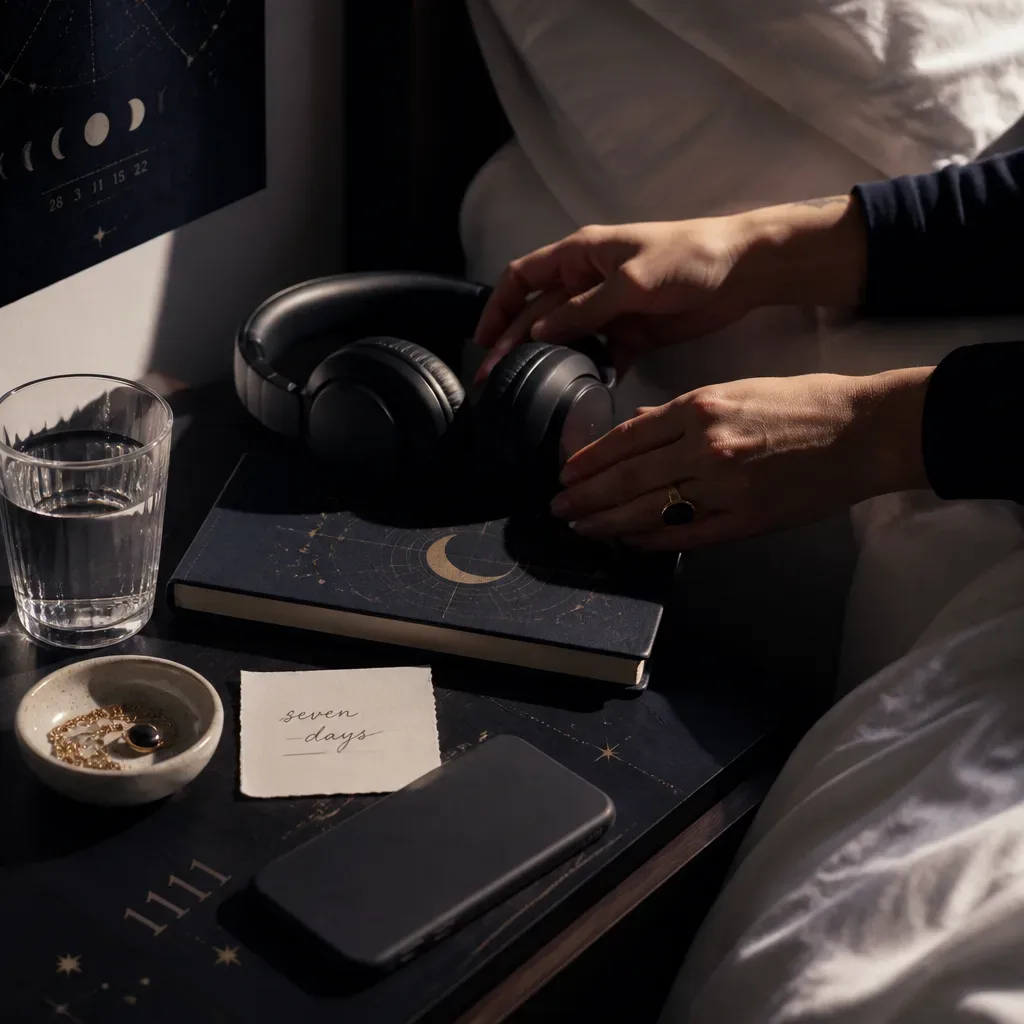
What should each day of the 7-day Dream-Self plan include?
Each day should include one listen, one noticing, and one small matching action.
This is not a complicated plan. It is a way to keep the audio at the center. The daily affirmation and Manifestation Board can support the practice later, and the app also includes them, but they are complements. The audio is the method. In week one, the Dream-Self Moment gets the first seat at the table.
Use this plan as a gentle container:
| Day | Listening focus | After-listening note | Matching action |
|---|---|---|---|
| 1 | Hear the whole recording without fixing it | One word that stayed | Drink water, stand taller, clear one surface |
| 2 | Notice the voice of your future self | One sentence that felt close | Answer one message from steadiness |
| 3 | Listen for identity, not outcome | “I am someone who…” | Make one choice that agrees |
| 4 | Let the body respond | Where you softened or resisted | Take a slower breath before acting |
| 5 | Repeat the sentence that finds you | One line as an affirmation | Say it once, quietly |
| 6 | Notice what is becoming familiar | One thing that felt less strange | Remove one tiny contradiction |
| 7 | Listen as if it is already known | What you are ready to keep | Choose next week’s listening window |
Seven days is short, but the number is useful. A week has a rhythm the body already understands: work days, rest days, errands, meals, the laundry that somehow returns. A 2010 paper in Health Psychology found that planning specific when-and-where cues helped people perform intended behaviors more reliably. The cue is not glamorous. It is the hook.
If you work with affirmations, keep them in service of the listening. Choose one line from the audio, not ten new sentences from the internet. Say it once. Write it once. Then live near it for the day.
One true sentence repeated with care can do more than a page written to impress yourself.
How should you listen when your mind keeps arguing?
You listen by letting the argument be present without giving it the microphone.
The mind may say, “This is not true yet.” It may list bills, old stories, timing, family history, the email you should have answered. That does not mean the practice is failing. It means the recording has met the part of you that was trained to stay safe through doubt.
Neville Goddard often wrote about assuming the feeling of the wish fulfilled. You do not need to adopt every word of his work to use one practical piece: identity is rehearsed. Modern psychology uses different language, but it also studies mental rehearsal. A 1995 study by Pascual-Leone and colleagues found that mental practice of a piano exercise produced measurable changes in motor cortex representation, though physical practice produced stronger effects. The brain responds to rehearsal. It also knows the difference between fantasy and action, which is why the matching action matters.
Try this listening posture:
- Let the first play be plain. Do not analyze.
- Let your breath be natural. No special breathing is required.
- If a sentence bothers you, mark it gently after the audio ends.
- If a sentence warms you, keep it for the day.
- If nothing happens, count the listening as complete.
Dr. Andrew Huberman has often discussed the nervous system’s need for repetition and state regulation when learning new behaviors. You do not have to force a calm state. But you can reduce friction: lower the lights, sit with your back supported, and listen when you are not actively rushing.
Doubt is not proof that you are blocked. Doubt is often the sound of an old self checking the door.
If you want a broader map of belief and practice, read the Manifestation pillar after your listening, not before. Let the audio speak first.
What do you do after the audio ends?
After the audio ends, take one minute to notice what changed, then make one ordinary choice that matches what you heard.
This is where week one becomes lived. Not dramatic. Real. You may notice your shoulders lower. You may want to clean one corner of your desk. You may feel resistance and still send the honest message. The after-moment is not a test of whether the method worked. It is a small bridge between hearing and behaving.
Use a simple three-line note if you like:
- The sentence I heard most clearly was: ____.
- My body felt: ____.
- One matching action today is: ____.
A 2018 review in Psychological Bulletin on self-monitoring and behavior change found that tracking behavior can support change, especially when paired with goals and feedback. Keep the tracking light. If the note becomes another place to criticize yourself, make it smaller. One word is enough.
Here are matching actions that stay ordinary:
| If your audio says… | A matching action could be… |
|---|---|
| “I trust my pace.” | Leave 10 minutes earlier or stop rushing one task |
| “I am well held.” | Ask for one specific kind of help |
| “I create from steadiness.” | Work for 20 focused minutes before checking messages |
| “I choose what feeds me.” | Eat something simple before you become sharp with hunger |
As a food writer, I trust small preparations. A pot does not become dinner because I stare at it with longing. I wash the herbs. I warm the pan. I taste. The future self is not only heard. She is served by the next small act.
The body believes what the day repeats.

Where do affirmations, boards, and astrology fit in week one?
They fit as quiet supports, not as replacements for the Dream-Self audio.
The AYA Method begins with listening. If you add anything in the first seven days, add it carefully. Too many tools can become a way to avoid the one practice that is asking for your attention. The daily affirmation can help you carry one sentence from the audio. The Manifestation Board can help you see a symbol or image of what you are practicing. But neither is the pillar here.
If you are drawn to timing, the Astrology and manifestation guide can help you think about lunar cycles, natal themes, or seasonal beginnings. Keep it simple in week one. You do not need the perfect moon to begin listening. A Tuesday with dishes in the sink is enough.
Princeton’s Global Consciousness Project, active from 1998 through 2015, explored correlations in random number generators during major global events. The findings remain debated, and they should not be treated as proof of personal manifestation. Still, the research is one example of why people keep asking how attention, meaning, and collective focus might relate. In your first week, stay closer to what can be practiced: repeat the audio and watch your choices.
A calm support stack for week one might look like this:
- Dream-Self Moment: once daily, non-negotiable center.
- Affirmation: one sentence from the audio, once daily.
- Board: one image or phrase, viewed briefly.
- Astrology: optional timing note, not a rule.
For a cleaner explanation of affirmation language, use the Affirmations pillar. Then come back to the recording. The support is useful only if it returns you to the method.
The quietest tool is often the one you actually repeat.
How will you know the first week is working?
You will know week one is working when the listening becomes easier to return to and one small behavior begins to agree with the future self you are hearing.
Do not look only for intensity. Many people expect tears, visions, or sudden certainty. Sometimes the sign is smaller: you stop arguing with one sentence. You pause before repeating an old pattern. You eat before you become empty and mean. You answer from the self who already knows her life is being made.
In Lally’s 2009 habit study, missing one opportunity did not fully derail habit formation when participants returned. That is good news. If you miss day four, listen on day five. Do not perform guilt. Guilt is noisy and usually unhelpful.
Use these week-one markers:
| Marker | What it can mean |
|---|---|
| You remember the audio without an alarm | The cue is beginning to stick |
| One sentence repeats during the day | The future-self language is becoming familiar |
| You notice resistance sooner | Awareness is arriving earlier |
| You take one small matching action | Listening is meeting behavior |
| You return after missing a day | The practice is becoming yours |
If you want to read the fuller method after these seven days, return to the AYA Method. If you want the broader theory of intention, identity, and attention, keep the Manifestation pillar nearby. But do not make reading a substitute for listening.
Week one is not about becoming someone else. It is about recognizing the voice that has been trying to come home.
Leave the headphones where morning can find them.