sleep science
Best Nap Length for a 3-Minute Dream-Self Audio Reset
Find the best nap length for a 3-minute Dream-Self audio reset, with a 25-minute timing plan that protects sleep and keeps your practice intact.

The best nap length for a 3-minute Dream-Self audio reset is usually 20 minutes of sleep plus 3 minutes of listening, with 1 to 2 minutes on either side. That keeps the whole practice near 25 minutes, short enough to avoid grogginess and long enough to change the state of the room.
At 2:22 p.m., the calendar looked smug. One call had run long, lunch had become three almonds, and the child-care text had arrived on cue. This is exactly where a reset earns its keep: not as a fantasy of perfect conditions, but as a small, timed gate back into agency.
What is the best nap length for this reset?
The best nap length is 20 minutes if you want alertness, not a second morning.
Sleep researchers usually place the useful short nap in the 10-to-30-minute range. A NASA study often cited from Mark Rosekind and colleagues found that a 26-minute cockpit nap improved pilot performance by 34% and alertness by 54%. That number has become a little famous for a reason. It is not mystical. It is scheduling with a pulse.
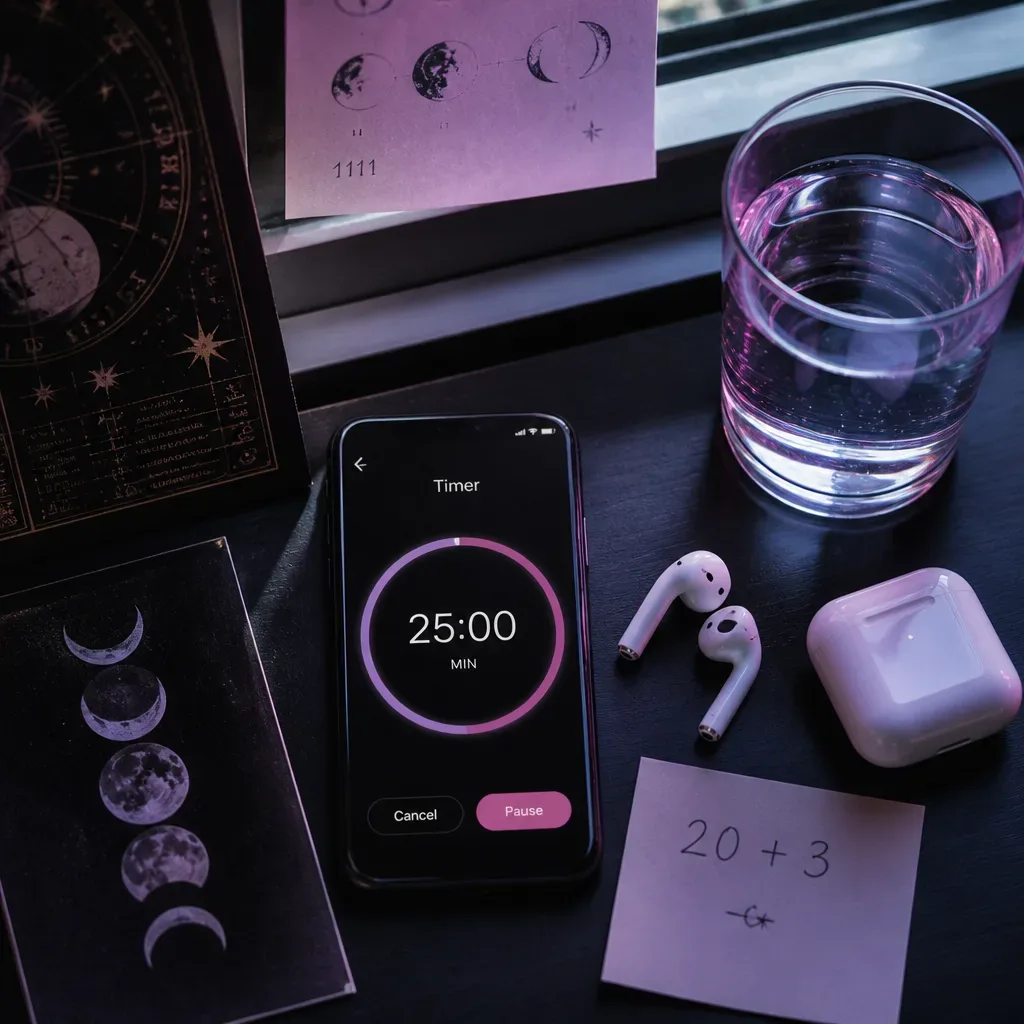
For a 3-minute Dream-Self audio reset, 20 minutes is the cleaner dial. Set an alarm for 22 minutes, expect 2 minutes of settling, and protect the 3 minutes after waking for audio. The whole thing lands around 25 minutes. That matters because many people do not have an hour. They have a strange strip of time between a meeting and school pickup.
The danger zone is not laziness. It is sleep inertia. That is the thick, slightly underwater feeling that can happen when you wake from deeper sleep. A 2017 review in Sleep Medicine Reviews notes that sleep inertia can affect performance for minutes and, in some conditions, longer than 30 minutes. If your reset makes you less useful, the dial was set wrong.
Here is the plain rule: a nap is not better because it is longer; it is better because you can return cleanly. The reset works when your nervous system gets a brief downshift and your attention comes back without dragging a dream behind it.
How do you time the 3-minute Dream-Self audio?
Listen to the 3-minute Dream-Self audio immediately after waking, before the phone gets a vote.
This is where the AYA Method becomes practical rather than decorative. The AYA Method is a daily audio manifestation practice. Each day you listen to a short personalized recording, your Dream-Self Moment, narrated from the version of you who has already manifested the life you intend. Listening is the practice. Repetition is the work. The audio is the method.
For a nap reset, the audio belongs after the nap. Before the nap, it can blur into sleep. After the nap, it becomes the first signal your waking mind receives. That order matters. Habit researchers including Wendy Wood have written that stable cues help behaviors repeat; the cue here is waking, the action is listening, and the reward is a clearer return.
Use this timing plan for seven days:
- Set a 25-minute calendar block.
- Put your phone on Do Not Disturb, but allow the alarm.
- Recline for 20 minutes with eyes closed.
- Wake with one alarm, no snooze.
- Sit up slightly and play the 3-minute Dream-Self audio.
- Write one word for the state you are choosing next.
| Reset type | Sleep time | Audio time | Best for |
|---|---|---|---|
| Micro reset | 8 minutes | 3 minutes | Tight days, parked-car practice |
| Standard reset | 20 minutes | 3 minutes | Alertness and clean return |
| Full-cycle reset | 90 minutes | 3 minutes | Heavy sleep debt or recovery days |
The standard reset is the daily workhorse. Keep the ceremony small. A practice that survives a crowded Tuesday is more valuable than a ritual that only works on vacation.
Why not take a 60-minute or 90-minute nap instead?
A 60-minute nap is often too deep for a fast reset, while a 90-minute nap is useful only when you can afford a full sleep cycle.
Sleep has architecture. The National Institute of Neurological Disorders and Stroke describes sleep as moving through non-REM stages and REM in cycles that average about 90 minutes. If you wake in slow-wave sleep, the body may object. Loudly. That is why a 60-minute nap can feel like being pulled out of a basement with bad lighting.
A 90-minute nap can be excellent when the day has already been lost to poor sleep, travel, or caregiving. Parents know this gate. So do people rebuilding after burnout. The 90-minute version gives the brain a better chance of completing a cycle, including REM. But it is not a reset. It is a repair block.
The Centers for Disease Control and Prevention has reported that about 1 in 3 U.S. adults do not get enough sleep. That missing sleep has consequences for mood, attention, glucose regulation, and decision-making. A 20-minute nap can help the afternoon; it cannot erase chronic sleep debt. This is where the mirror gets blunt.
Use the longer nap when the body is asking for recovery, not when the calendar is asking for performance. Different door. Different key.
A quick comparison:
- Choose 10 to 12 minutes when you are wired but depleted.
- Choose 20 minutes when you need alertness and steadiness.
- Choose 90 minutes when you are deeply under-slept and have cover.
- Avoid 45 to 60 minutes when you need to be sharp immediately after.
If your life includes insomnia, talk to a clinician before adding daytime sleep. The American Academy of Sleep Medicine recommends adults sleep 7 or more hours per night on a regular basis. Naps are punctuation, not the whole sentence.
What if you only have 11 minutes?
Use 8 minutes of eyes-closed rest and 3 minutes of audio, and call it a legitimate reset.
The 11-minute reset is not pretending to be sleep. It is a pressure valve. I have used it in a parked car with a coat over my lap and a grocery receipt stuck to my shoe. It counted because I did not negotiate with the conditions. I closed my eyes, let the body stop bracing, then listened.
Brief rest has evidence behind it, even when sleep does not arrive. Dr. Andrew Huberman has popularized non-sleep deep rest protocols, while the underlying practices draw from yoga nidra and relaxation research. In small studies, yoga nidra and brief relaxation practices have been associated with reduced perceived stress and improved autonomic balance. The exact numbers vary, but the direction is useful.
This is also where Manifestation pillar thinking needs a spine. Naming a desired state is not the same as entering it. The audio gives the mind a rehearsed identity cue after the body has softened. Three minutes is short, but attention is not measured only by duration. It is measured by contact.
Try this 11-minute version when the day is crowded:
- Minute 0 to 1: sit or recline and lower the light.
- Minute 1 to 8: eyes closed, slow exhale, no performance.
- Minute 8 to 11: play the Dream-Self audio once.
- Final 10 seconds: name the next right action.
When time is thin, precision matters more than drama. The reset is not less real because it is small. The signal can still arrive.
How should you set up the room and body?
Set up the room like you expect the reset to work: dim, cool, quiet, and boring.
The body reads cues faster than the conscious mind admits. Light affects circadian timing through melanopsin-sensitive retinal cells, and evening light has stronger consequences than midday light, but a dimmer nap space still helps the nervous system stand down. The Sleep Foundation often cites about 65 degrees Fahrenheit, or 18.3 Celsius, as a common bedroom temperature target. You do not need perfection. You need fewer objections.
Caffeine has a half-life often estimated around 5 hours, though it varies by person. If you drink coffee at noon, a meaningful amount may still be active at 5 p.m. That does not make the nap impossible, but it changes the odds. For many people, the cleanest reset lands before the second coffee, not after it.
Protect the first 3 minutes after waking. No messages. No news. No calendar scan. If you use a daily affirmation, let it support the audio rather than replace it; the Affirmations pillar is useful when words are chosen with care, but the Dream-Self audio is still the core practice here.
A minimal setup looks like this:
- One alarm, placed close enough to stop without standing.
- Eye mask or lowered light.
- Light blanket, because body temperature drops during rest.
- Headphones ready before the nap starts.
- A one-line note afterward: alertness, mood, or next action.
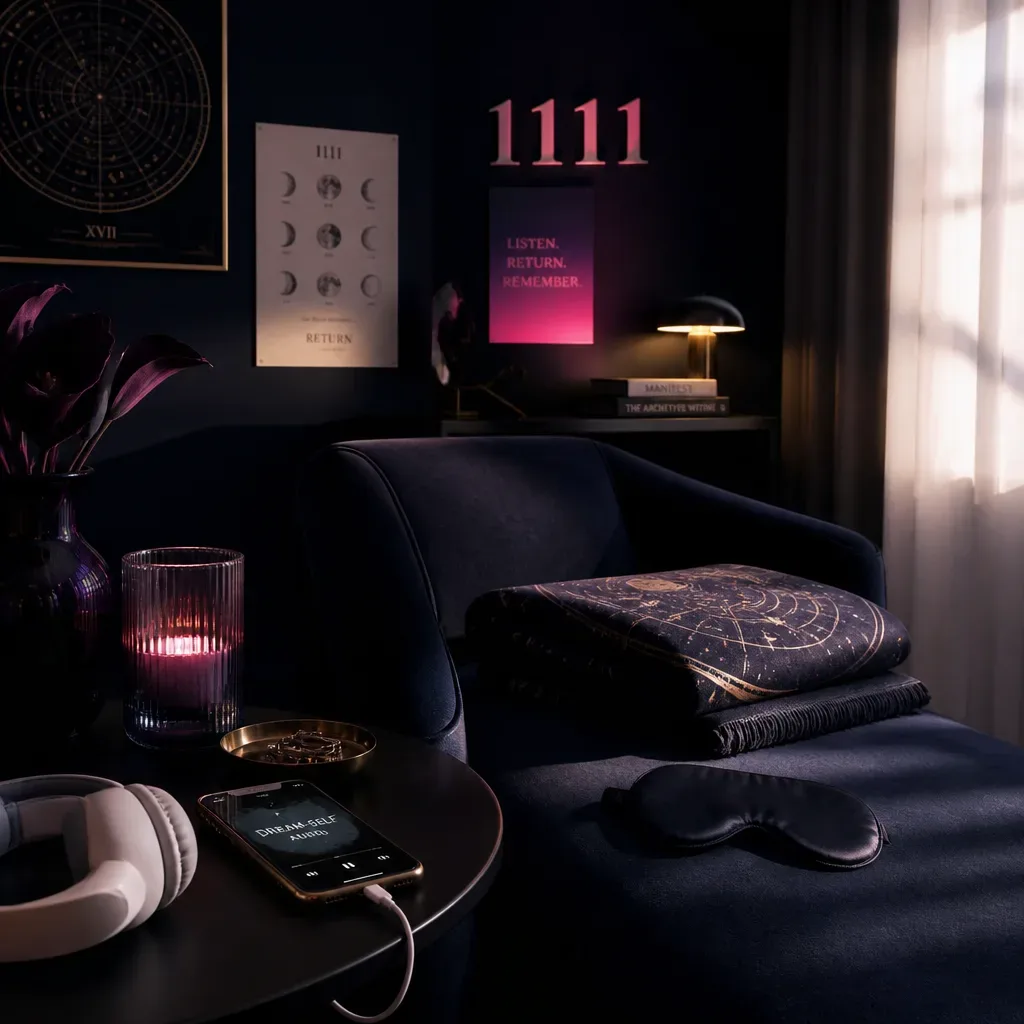
If you like timing your resets with lunar phases or recurring numbers, keep it grounded. Astrology and manifestation can give the practice a symbolic frame, but the nap still needs an alarm. The stars may set a mood. Your calendar sets the boundary.
Can a nap reset actually support manifestation practice?
Yes, because it pairs state change with repeated identity rehearsal, which is where manifestation stops being decoration.
Mental rehearsal has a long research history in sports psychology and behavioral medicine. A 2014 meta-analysis in Psychological Bulletin found that mental practice can improve performance, especially when paired with physical practice rather than used alone. That is the hinge. The audio does not do your life for you. It helps your attention return to the version of you who takes the next clean action.
Joe Dispenza talks often about rehearsing a future self until the body recognizes the state. Neville Goddard, from a very different era, wrote about assuming the feeling of the wish fulfilled. I hold both with editorial distance and practical respect. The useful part is repetition. The risky part is pretending repetition replaces action.
Princeton Engineering Anomalies Research, often called PEAR, studied intention and random systems for nearly three decades. Its conclusions remain debated, and mainstream science has not treated them as settled proof. Still, the cultural fascination points to something real in human behavior: people want evidence that attention matters. In daily practice, the evidence is simpler. Did you return steadier? Did you make the call? Did you stop rehearsing the old argument?
The 3-minute Dream-Self audio after a nap works because the mind is less defended for a moment. The room is quieter. The body has stopped gripping the day. The future self is easier to hear when the nervous system is not shouting over her.
If you also keep a Manifestation Board, use it after the audio, not before. The board can act as a visual witness. The audio remains the method. Order keeps the practice honest.
What exact schedule should you use this week?
Use a 25-minute reset for seven days, then adjust by the evidence your own body gives you.
Seven days is long enough to see a pattern and short enough that the plan does not become a personality. Track only one or two metrics. Stanford sleep researcher William Dement famously argued that sleep debt is cumulative; whether your debt is large or small, your afternoon data will tell on you quickly. Do not make the tracker precious. A 1-to-5 score is enough.
Here is the week plan:
- Days 1 and 2: standard 20-minute nap plus 3-minute audio.
- Day 3: 11-minute reset if your schedule is tight.
- Day 4: standard reset again, same time if possible.
- Day 5: no nap after 3 p.m.; use seated rest only.
- Day 6: test a 25-to-26-minute nap if you wake too soon at 20.
- Day 7: review your notes and choose your default.
Track three signals:
| Signal | 1 means | 5 means |
|---|---|---|
| Alertness | foggy, slow return | clear within 5 minutes |
| Mood | irritable or flat | steady, available |
| Action | avoided next task | took next clean step |
A good reset does not need to feel cinematic. It needs to change the next 30 minutes. If 20 minutes leaves you sharp, keep it. If it leaves you dull, shorten to 12. If you are under-slept and fraying, stop asking a nap hack to do the work of a night.
The dial is small, but it is yours.
Set the alarm, close the gate, return on cue.