dream science
False Awakening Dreams: Reset With Dream-Self Audio
False awakening dreams can leave the morning tilted. Learn what they mean, why they happen, and how Dream-Self audio helps you reset.
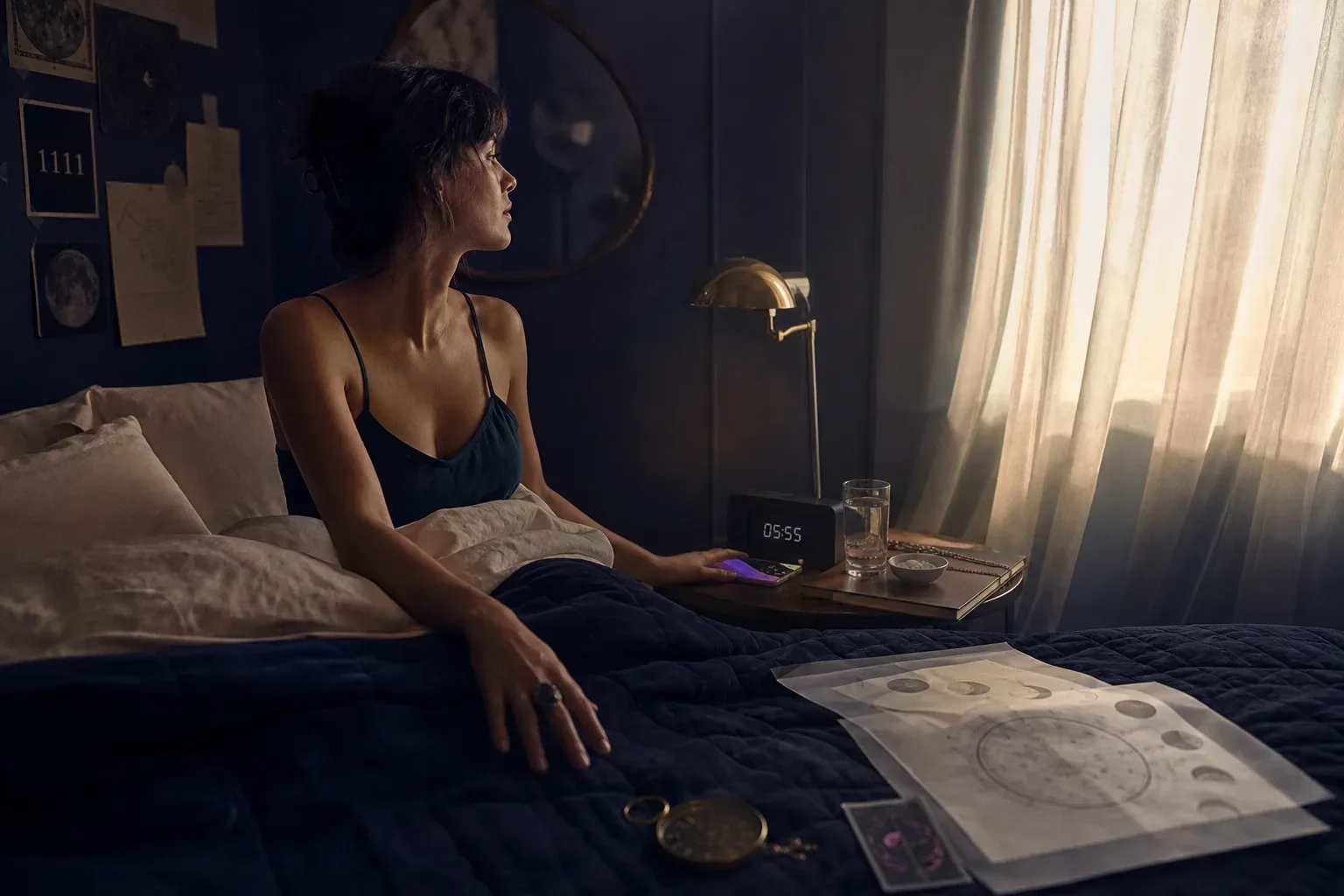
False awakening dreams are dreams where you think you have woken up, only to wake again. They often happen near REM sleep, feel strangely ordinary, and can leave the day tilted. A Dream-Self audio practice helps by giving the first real waking moment a steady cue, a name, and a direction.
What are false awakening dreams?
False awakening dreams are sleep events where the mind simulates waking before the body has fully arrived there.
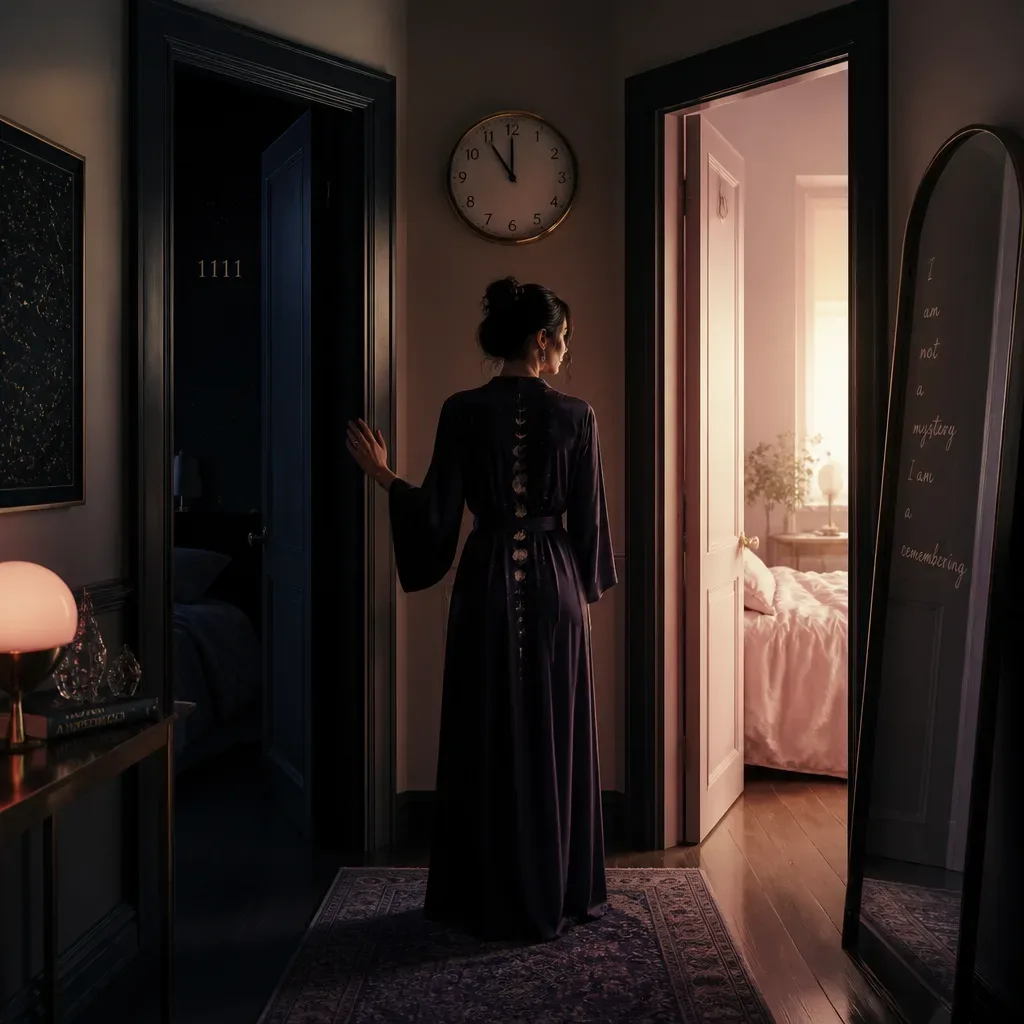
The detail is the trick. You open your eyes in the dream, check the clock, stand up, maybe walk to the kitchen. Then the dial slips. The sink is in the wrong place. Your phone shows 11:11 twice. You wake again, this time for real, and the room feels accused of something.
Sleep researchers usually discuss false awakenings near lucid dreaming because both involve awareness behaving oddly inside REM sleep. REM periods tend to recur about every 90 minutes, according to standard sleep-stage models used by the American Academy of Sleep Medicine. Late-night REM is often longer, which is why these dreams may cluster close to morning.
A useful distinction: a nightmare usually announces itself with threat. A false awakening borrows your schedule. It can include the alarm, the bathroom mirror, the coffee pot, the same blue cup you always use. That is why it lands so hard. Ordinary life becomes the costume.
In dream research, Stephen LaBerge’s work on lucid dreaming in the 1980s helped establish that dreamers can sometimes become aware inside REM sleep and signal with eye movements. False awakening dreams sit near that gate. You are not fully lucid, but some part of you is close enough to the surface to notice the edges.
The first rule is simple: name it without dramatizing it. A named dream has less room to run the day. “That was a false awakening” is not a spell. It is a clean label, and clean labels are good medicine before breakfast.
Why do false awakening dreams feel so convincing?
False awakening dreams feel convincing because they use familiar sensory maps while your reality-checking systems are still softened by sleep.
The brain is not lazy in dreams. It is theatrical. It can stage your bedroom with enough accuracy to fool you, especially because you are not comparing every object to waking logic. The National Institute of Neurological Disorders and Stroke describes REM as a stage when brain activity rises and vivid dreaming is common. The body is mostly still, but the inner room is lit.
This is why a false awakening can feel more disturbing than a bizarre dream. If a silver horse walks through the ceiling, you know where you stand. If you brush your teeth, read one email, and then wake up again, reality has become negotiable. Most people do not fear the dream. They fear the duplicate morning.
There are common triggers, though none are absolute. In small studies and clinical reports, false awakenings appear more often around disrupted sleep, stress, lucid dreaming attempts, irregular wake times, and intense pre-sleep focus. Adults are generally advised by the Centers for Disease Control and Prevention to get at least 7 hours of sleep per night, and dipping below that can make the borderlands louder.
Watch for these patterns:
- You wake from the dream close to your usual alarm time.
- The dream repeats a task you perform every morning.
- You notice clocks, phones, doors, or mirrors behaving slightly wrong.
- You feel panic only after the second waking.
- The dream appears during a season of pressure, grief, travel, or schedule change.
A false awakening is not proof that the day is cursed. It is proof that the mind knows your routine well enough to imitate it. The mirror can be convincing and still be a mirror.
How can Dream-Self audio reset the morning after one?
Dream-Self audio resets the morning by replacing the dream’s confusion with one repeated, chosen signal.
This is where the AYA Method becomes practical, not decorative. The AYA Method is a daily audio manifestation practice. Each day you listen to a short personalized recording, your Dream-Self Moment, narrated from the version of you who has already manifested the life you intend. Listening is the practice. Repetition is the work. The audio is the method.
After a false awakening, the nervous system wants to audit the room. Did I really wake up? Did I already send that message? Was the stove on in the dream or here? A short audio cue gives the mind a track to follow before it begins multiplying questions. In habit research, context cues matter; Wendy Wood’s work on habits has shown that repeated behaviors become more automatic when tied to stable settings.
The Dream-Self Moment is not there to explain the dream. It is there to establish the waking self. That difference matters. Analysis can wait 10 minutes. Direction should arrive first. The same way I do not season a soup before the onions soften, I do not interpret a dream while my pulse is still voting.
A morning reset can be beautifully plain:
- Sit up and place both feet on the floor.
- Say the date, the room, and the first task of the day.
- Play your Dream-Self audio once, without scrolling.
- Write one line: “I woke for real at ___.”
- Drink water or coffee only after the audio ends.
If you also use written statements, keep them secondary. The Affirmations pillar is useful for language, but after a false awakening the ear is often steadier than the page. Sound enters before argument. A voice can become a doorframe.

What should you do in the first 90 seconds after a false awakening?
The first 90 seconds should be used to orient the body, not interrogate the dream.
There is a reason I like 90 seconds. A full sleep cycle is roughly 90 minutes, but the first waking minute and a half has its own weather. You are crossing from dream imagery into daylight behavior. If you hand that moment to your phone, the feed becomes the officiant. If you hand it to a chosen audio, the day gets a cleaner witness.
Dr. Andrew Huberman often discusses the importance of morning light for circadian timing, noting that outdoor light early in the day helps set the body’s clock. That does not mean you need a heroic sunrise ritual. It means the body believes repeated signals. Light, sound, posture, and timing all vote.
Use this comparison when the dream leaves you foggy:
| Response after waking | What it does | Best use |
|---|---|---|
| Checking messages | Adds new stimuli before orientation | Delay 5 to 10 minutes |
| Writing every dream detail | Can help memory but may deepen rumination | Use after grounding |
| Dream-Self audio | Gives identity and direction through sound | Use immediately |
| Reality checks | Confirms waking through senses | Use with calm, not panic |
| Morning light | Anchors circadian timing | Use within the first hour |
A 2021 Sleep Foundation overview notes that lucid dreaming and false awakenings often share features, including the sense of being awake inside a dream. Reality checks can help, but make them simple. Read a short line twice. Touch the wall. Look at your hands. Do not create a courtroom.
The goal is not to win against the dream. The goal is to stop letting the dream chair the meeting. Ninety seconds is enough time to change who gets the microphone.
Are false awakening dreams a spiritual signal or a sleep event?
False awakening dreams can be treated as sleep events first and personal signals second.
This is the mature position. The brain has stages, chemistry, memory, stress, and timing. It also has symbolism. Refusing either side makes the room smaller. The Manifestation pillar frames intention as a practice, not a denial of biology. That frame is useful here: respect the sleep science, then ask what the moment is asking you to notice.
Numbers often appear in these dreams because clocks and phones are morning objects. If you keep seeing 11:11 in a false awakening, do not rush to crown it prophecy. In numerology, 11 is often called a master number associated with intuition and heightened perception. Doreen Virtue popularized angel-number language in the 2000s, though many readers now approach that work with healthy distance. The point is not to outsource your judgment to the clock.
A better question is: what repeated signal arrived with the number? Were you late? Were you unable to speak? Was the kitchen flooded? Did the mirror refuse your face? Symbols have context. The number is punctuation. The sentence is the whole dream.
For readers who track lunar cycles or timing patterns, Astrology and manifestation can give a wider calendar. Just keep the hierarchy clear. If false awakening dreams increase with poor sleep, grief, alcohol, or anxiety, start there. A signal that ignores the body is not wisdom. It is noise wearing jewelry.
My grandmother had a rule: no one stirs a pot while angry. She did not call that nervous-system regulation, but that is what it was. Some old practices knew the body before the vocabulary arrived.
When should false awakening dreams get extra support?
False awakening dreams need extra support when they become frequent, frightening, or disruptive to daytime functioning.
One strange dream is a weather change. Repeated distress is a pattern. The American Academy of Sleep Medicine recognizes nightmare disorder when disturbing dreams cause significant distress or impairment, though false awakenings are not the same diagnosis. If you are losing sleep because you fear the next false awakening, the issue has moved from curiosity into care.
Seek support if any of these are true:
- You have false awakenings several times a week.
- You avoid sleep because you fear the dream loop.
- You wake with panic symptoms or chest tightness.
- You cannot tell whether a memory came from waking life or the dream.
- You have trauma symptoms, severe anxiety, or major sleep loss.
- A medication, substance, or schedule change coincides with the dreams.
Clinical approaches may include cognitive behavioral therapy for insomnia, imagery rehearsal therapy for nightmares, trauma-informed therapy, or a sleep evaluation. Imagery rehearsal therapy has support in nightmare treatment studies, including work summarized in the Journal of Clinical Sleep Medicine. It trains the mind to rehearse a new dream ending while awake. Notice the pattern: repetition again. The dial changes through repeated contact.
Dream-Self audio can sit beside professional care because it is structured, daily, and gentle. It should not pretend to be a diagnosis. The practice gives the waking self a voice before the anxious self starts cooking with too much salt. If you use affirmations too, the Affirmations pillar can help you write lines that are believable rather than sugary.
False awakening dreams are not a failure of consciousness. They are a threshold event. Cross it slowly. Name the room. Play the audio. Let the real morning answer.
The second waking can still become the first true signal.