reality shifting
Julia Method Shifting With a 3-Minute Audio
Julia method shifting can pair with a 3-minute Dream-Self audio to steady attention, script identity, and enter sleep without overworking the signal.
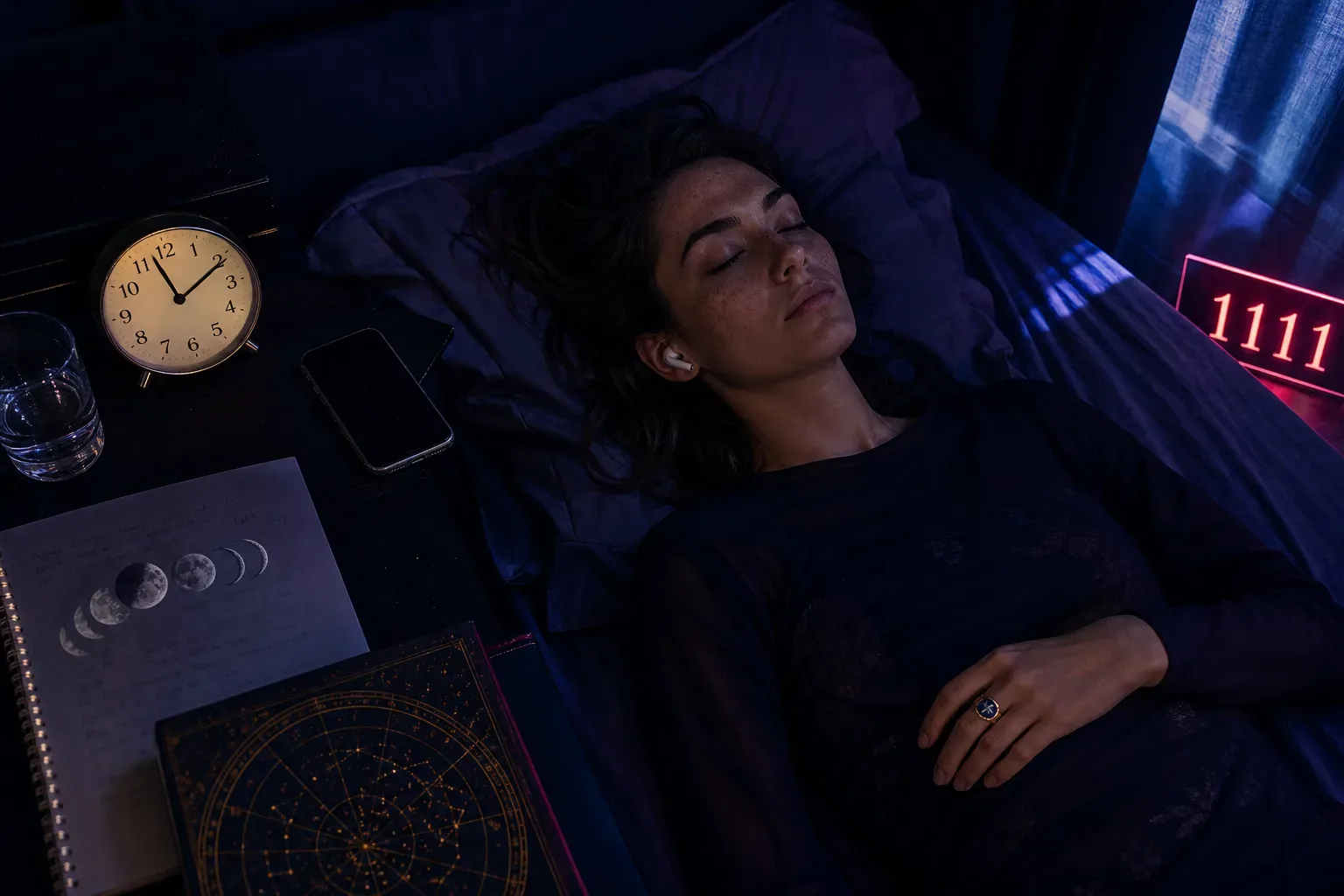
Julia method shifting can be paired with a 3-minute Dream-Self audio by using the audio as the opening cue, then moving into “I am” statements, counting, and sleep-adjacent visualization. The point is not to force a shift. The point is to make identity rehearsal stable enough for the mind to follow.
What is the Julia Method, really?
The Julia Method is a reality-shifting routine built around identity repetition, stillness, and the drowsy threshold before sleep.
Most versions begin the same way: lie down, stay still, repeat “I am,” count slowly, then add details from the desired reality. Some practitioners count to 100. Some use music. Some wait for tingling, floating, heaviness, or the sense that the room has tilted. The internet argues about the details. The useful part is simpler: the method narrows attention to one identity long enough for the usual self-story to loosen.
Neville Goddard called the sleep threshold the “state akin to sleep,” a phrase that still survives because it names the gate cleanly. Modern sleep science is less poetic. The American Academy of Sleep Medicine often frames normal adult sleep latency around 10 to 20 minutes, though stress and irregular schedules can push that number hard. The Julia Method borrows that naturally suggestible window, then gives it a script.
That script matters. A 2012 review in Frontiers in Psychology described mental imagery as capable of recruiting perceptual and emotional systems, not just verbal thought. That does not prove you will wake in another timeline. It does explain why a scene repeated with the body at rest can feel more convincing than a sentence scribbled at noon between emails.
The Method is not a personality test. It is not proof that you are “good” at shifting if you feel symptoms, or “bad” if you feel nothing. Symptoms are unreliable witnesses. Attention is the better witness.
A gate does not open because you stare at the hinges. It opens when your weight arrives in the right place.
Why add a 3-minute Dream-Self audio before shifting?
A 3-minute Dream-Self audio gives the Julia Method a stable starting signal instead of leaving your attention to improvise in the dark.
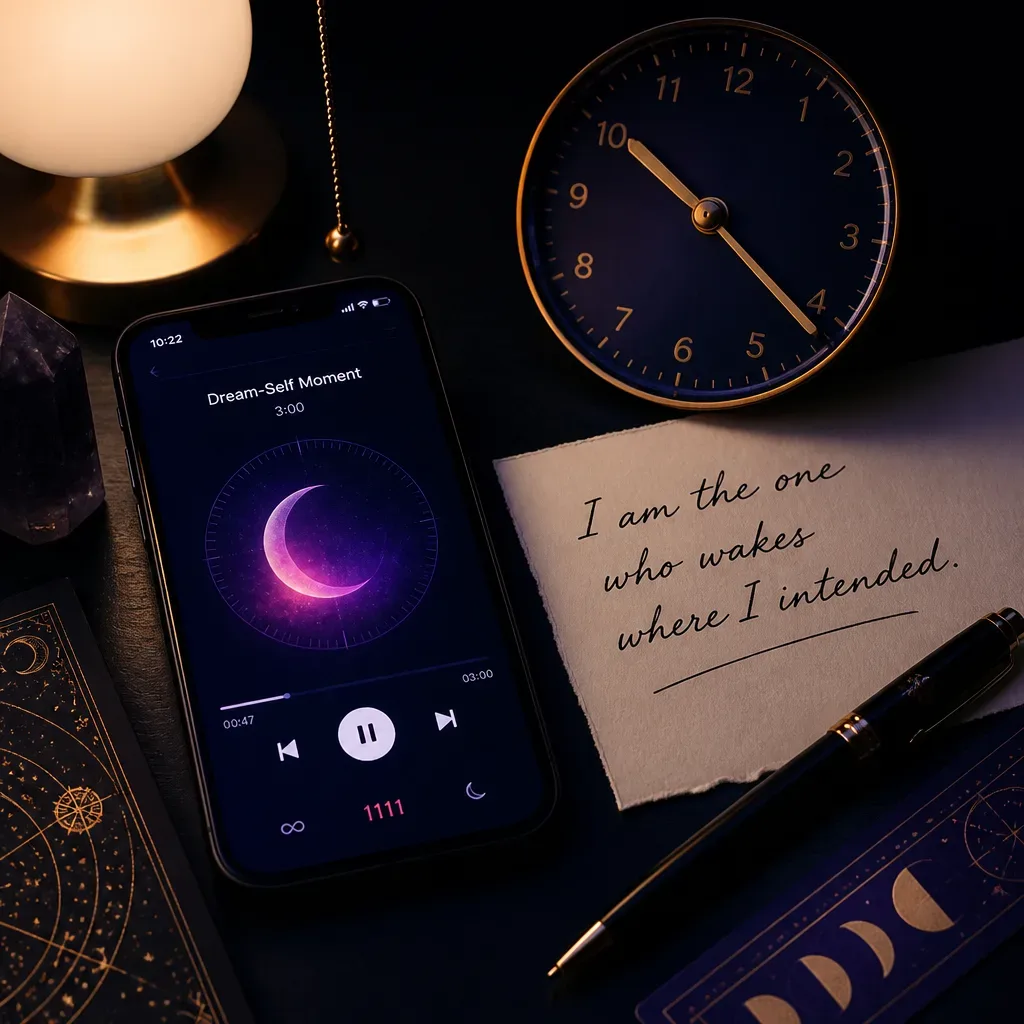
This is where the AYA Method becomes useful without taking over the whole room. The AYA Method is a daily audio manifestation practice. Each day you listen to a short personalized recording, your Dream-Self Moment, narrated from the version of you who has already manifested the life you intend. Listening is the practice. Repetition is the work. The audio is the method.
For julia method shifting, the audio works like a metronome before the music. Three minutes is short enough that you do not start negotiating with yourself, and long enough to change state. Dr. Andrew Huberman has often discussed how breath, attention, and low-arousal auditory inputs can shift autonomic tone in minutes, especially when practiced consistently. You do not need a 40-minute ceremony to tell the nervous system, “We are doing the thing now.”
There is also a base-rate point here. Practices that are too long fail from friction. A 2009 study in the European Journal of Social Psychology found habit formation took a median of 66 days, with a wide range from 18 to 254 days depending on the behavior. If the cue is small, it has a better chance of being repeated through an ordinary week.
Use the audio as the dial, not the destination. You listen. You let the future-self narration name the identity. Then you move into the Julia Method sequence with less mental clutter.
The daily affirmation can support this, and a Manifestation Board can give the scene visual anchors, but neither is the spine. The spine is the audio. Everything else is punctuation.
How do you do julia method shifting with the audio, step by step?
You do it by starting with the audio, reducing the method to one identity, and letting sleep complete the practice.
Here is the clean version I would use with a skeptical client, which means it is the version I would use on myself. Keep the whole practice between 10 and 18 minutes before you stop performing and simply rest. That range respects sleep latency data and keeps the Method from becoming a late-night audit.
- Write one identity sentence. Use one line: “I am the version of myself who wakes in the room I chose.” One sentence beats eleven tabs open in the mind.
- Play the 3-minute Dream-Self audio. Put the phone face down. No checking the time. No scrolling after.
- Repeat “I am” slowly for 3 to 5 minutes. Let it become plain. Drama burns fuel.
- Count from 1 to 100. At every tenth number, add one desired-reality detail: the floor, the window, the first sound, your name being called.
- Enter one ordinary scene. Not the climax. Not the proof. Choose waking up, opening a door, sitting at a desk, touching a cup.
- Let the body sleep. If checking begins, return to breath or counting. If frustration rises, stop the method and rest.
- Log one line in the morning. “Listened, counted to 70, dreamed of the room.” That is enough data.
This is not glamorous. Good. Glamour makes bad protocols. In finance, I learned to distrust any model that only works when the room is excited. The better model works when you are tired on a Tuesday.
If you want the wider frame, read the Manifestation pillar as the theory layer, then keep this Method as the nightly operating system. Theory names the map. Practice moves the feet.
What should your Dream-Self audio say for the Julia Method?
Your Dream-Self audio should speak from the identity already arrived, using sensory detail and present-tense narration without overloading the mind.
Three minutes is not much room. That is the advantage. A short recording forces editorial discipline. You do not need your entire desired reality biography. You need the tone of the self who lives there. The room. The body. The ordinary confidence of someone who is not asking permission from the old story.
A useful 3-minute structure looks like this:
| Time | Audio focus | Example language |
|---|---|---|
| 0:00-0:30 | Arrival cue | “Your body is still. The room is quiet. The signal has arrived.” |
| 0:30-1:15 | Identity | “I am the one who wakes where I intended.” |
| 1:15-2:15 | Sensory scene | “The light is soft. My hand knows the shape of the door.” |
| 2:15-3:00 | Release | “I do not chase the gate. I rest at it.” |
The words should be intimate, not inflated. Avoid giant claims that trigger argument. The brain is a precise auditor at night. If your audio says, “Everything is perfect,” some part of you may start submitting evidence to the contrary. If it says, “I know the first sound in the room,” the mind has a job it can actually do.
Research on implementation intentions, especially Peter Gollwitzer’s work from the 1990s onward, shows that specific if-then cues can improve follow-through across many behaviors. Your audio can borrow that principle: “When I hear the final breath, I begin counting.” Small cue. Clear action. Less debate.
For wording support, the Affirmations pillar is useful, but keep the hierarchy straight. Affirmations sharpen the language. The audio carries the state.
A sentence becomes more believable when the body hears it at the same gate every night.
What are the signs you are doing it correctly?
You are doing it correctly when attention steadies, the body softens, and you stop trying to certify the experience while it is happening.
Common signs include slower breathing, heaviness in the limbs, warmth, flashes of imagery, a brief loss of time, or the strange sense that the room is both present and far away. These can be meaningful in practice, but they are not rare in sleep onset. Hypnagogic imagery is a documented transition phenomenon, and sleep researchers have studied it for decades as the mind moves from wakefulness toward stage N1 sleep.
So yes, notice the signs. Do not worship them.
Better indicators are behavioral and repeatable:
- You can begin the practice within 2 minutes of getting into bed.
- You finish the 3-minute audio without reaching for the phone.
- Your “I am” statements stay mostly consistent for 7 nights.
- You feel less pressure to perform the shift.
- Your dreams, choices, or morning mood show small changes over 2 to 4 weeks.
That last line matters. Joe Dispenza often emphasizes rehearsal as a way of familiarizing the body with a future state before the external event arrives. You can hold that idea without turning it into spectacle. Familiarity is quieter than certainty. It shows up as fewer negotiations, cleaner choices, and the subtle feeling that the dial is no longer fighting your hand.
Princeton Engineering Anomalies Research, often discussed under the Princeton PEAR/GEO umbrella, spent decades examining mind-matter questions at the edges of mainstream science. Results remain debated, and the effect sizes were small. Still, the research is a useful caution: if you are going to speak about consciousness and reality, stay humble with the data and precise with the practice.
The most suspicious thing about a real signal is how little it needs to announce itself.

What mistakes make the Julia Method harder than it needs to be?
The main mistakes are over-scripting, chasing symptoms, practicing too late, and treating one difficult night as a verdict.
Over-scripting is the classic one. People build a desired reality document with 22 rules, 14 relationships, 8 appearance edits, and a dramatic entrance scene. Then they wonder why the mind will not relax. A script can help, but bedtime is not the hour for a legal contract. Choose one scene. Choose one identity. Let the rest wait.
Chasing symptoms is the second leak. Tingling arrives and the mind says, “Is this it?” The moment becomes a mirror. You are no longer in the scene; you are watching yourself attempt the scene. In meditation research, meta-awareness can be useful, but during sleep-adjacent visualization it often reactivates the monitoring mind. Tara Brach’s work on presence is helpful here: notice, soften, return.
Timing matters too. If you start at 1:17 a.m. after 90 minutes of scrolling, do not blame the Method for having poor traction. Blue-light research is mixed in real-world settings, but the broader sleep hygiene advice is consistent: reduce stimulation before bed. Even a 2015 review in Chronobiology International noted that evening light exposure can affect circadian timing and alertness.
Use this troubleshooting grid:
| Problem | Likely cause | Adjustment |
|---|---|---|
| You feel nothing | Expectation is too theatrical | Track attention, not sensations |
| You fall asleep instantly | Practice begins too late | Move audio 15 minutes earlier |
| You get anxious | Script is too loaded | Use one ordinary scene |
| You keep checking | Outcome pressure is high | Count and release after 100 |
| You quit after 3 nights | No tracking loop | Log 1 line for 14 days |
If timing and cycles matter to you, Astrology and manifestation can help you frame the season, especially around lunar resets. Just do not outsource the practice to the sky. The moon can mark the gate. You still have to lie down.
How do you track results without becoming obsessive?
Track the smallest repeatable signals for 14 to 30 days, then review patterns instead of judging each night.
I like a three-column note because it leaves no room for mythology. Column one: listened, yes or no. Column two: method length. Column three: morning signal. The signal can be a dream fragment, mood, clarity, a coincidence, or nothing. Nothing counts. Empty data is still data.
A 30-day window is useful because it is long enough to catch patterns and short enough that you do not build a religion around the spreadsheet. In behavior design, weekly reviews often beat daily verdicts because they reduce noise. Finance taught me the same thing in a less mystical suit: one trading day is gossip; a pattern is information.
Here is a simple log:
| Day | Audio | Julia Method | Morning signal |
|---|---|---|---|
| 1 | Yes | Counted to 60 | Restless, no dream |
| 7 | Yes | Counted to 100 | Saw the hallway image |
| 14 | No | Skipped | Scrolled late, poor sleep |
| 21 | Yes | Fell asleep at 40 | Woke calm |
| 30 | Yes | Full sequence | Repeating room dream |
Review after 7, 14, and 30 days. Look for boring evidence: easier starts, steadier scenes, fewer arguments with the method, recurring imagery. Boring evidence compounds. The spectacular is allowed to visit, but it is a poor landlord.
This is also where the broader Manifestation pillar can keep the practice grounded. Manifestation is not a nightly demand letter to reality. It is the disciplined naming of a direction, repeated until behavior, perception, and timing begin to move in the same room.
Skepticism is not the enemy of the signal. It is the instrument that keeps the signal clean.
If you use a daily affirmation, let it be one line drawn from the audio. If you use a Manifestation Board, choose one image that matches the ordinary scene. Complements are useful when they do not try to become the method.
How long before julia method shifting starts to work?
Give the practice 14 nights for state changes and 30 nights for pattern recognition before you decide what is happening.
Some people report vivid results on night one. Others get nothing but better sleep for two weeks, which is not nothing. With subjective practices, early results are noisy. Mood, sleep debt, stress, alcohol, cycle timing, and expectation all change the readout. A 2023 Gallup report found that many adults describe frequent stress, and stress is not a small variable when the whole method depends on relaxation and attention.
Set the evaluation windows before you begin:
- Nights 1-3: learn the sequence, no judgment.
- Nights 4-7: stabilize the audio cue and “I am” language.
- Nights 8-14: watch for changes in imagery, dreams, and emotional resistance.
- Nights 15-30: review patterns and adjust the script only once.
Do not revise nightly. Nightly revision is anxiety wearing a productivity costume. If the identity sentence is decent, let it work for 7 nights before you touch it. The mind needs repetition more than novelty.
For a clean starting point, use the 3-minute audio at the same time each night, follow the Julia sequence, and log one line in the morning. That is enough. The dial does not need your fingerprints all over it.
The room gets quieter when you stop asking it to prove itself.