subliminals
Do Subliminals Work? Research and Audible Alternatives
Do subliminals work for real change? See what research says, what results to expect, and why audible manifestation audio may work better.

Do subliminals work? They can influence attention and tiny choices under narrow conditions, but evidence for life-changing subliminal audio is weak. Research shows placebo effects are strong, awareness matters, and repeated audible practice is easier to measure, which is why I prefer a spoken Dream-Self Moment over hidden commands.
Do subliminals work, or are people just noticing patterns?
Subliminals can work in limited ways, but most dramatic online claims are much larger than the evidence.
The cleanest answer is not the most glamorous one. Subliminal perception is real: the brain can register stimuli below conscious awareness. A word flashed for milliseconds can tilt attention. A brief image can prime a preference. In laboratory settings, that has been shown often enough to be taken seriously by psychologists, though the size and reliability of effects vary.
The leap happens when that finding gets dressed up as a promise. A lab prime is not the same as a three-hour audio track whispering that your face, bank account, or relationship status has changed. That is where the dial slips. One specific cue influencing one specific choice is a different animal from hidden sentences rebuilding identity while you sleep.
The famous shadow over subliminals starts with James Vicary’s 1957 claim that flashing ‘Drink Coca-Cola’ and ‘Eat Popcorn’ during a movie increased sales. He later admitted the study was not valid. That did not kill the idea. It gave it a mythic afterlife, which is usually how a weak signal becomes a market.
A better question is: what exactly changed, and how did you measure it? If someone listens for 30 days and feels more confident, that feeling counts as data in their life. It does not prove the hidden message caused it. Sleep, attention, expectation, repetition, and community belief can all arrive in the same room wearing similar coats.
A signal is not stronger because it is hidden. Sometimes hidden just means unaccountable.
This is why I keep subliminals in the category of possible micro-influence, not reliable self-revision. For broader context on intention and identity practice, the Manifestation pillar gives a cleaner frame: name the aim, rehearse the self who can hold it, then behave on cue.
What does research actually say about subliminal self-help tapes?
Research on commercial subliminal self-help tapes is notably unimpressed.
The study that should be taped to every subliminal sales page is Greenwald, Spangenberg, Pratkanis, and Eskenazi’s 1991 paper in Psychological Science. In double-blind tests of subliminal self-help audiotapes, researchers tested products labeled for memory and self-esteem. Participants often believed they improved, but the tapes did not produce the specific effects promised by their labels.
That study is useful because it separates two things people often tangle: actual change and perceived change. The perceived change was real to the listener. The specific subliminal claim did not hold. If the label said memory and the person thought self-esteem improved, the mechanism is already messy. The mind will make meaning from a ritual, especially when money, hope, and repetition are involved.
There are also smaller priming studies worth naming. Strahan, Spencer, and Zanna reported in 2002 that subliminal thirst-related primes could influence drink consumption, but mainly when participants were already thirsty. Karremans, Stroebe, and Claus published a 2006 study where subliminal exposure to the Lipton Ice brand influenced choice under thirst conditions. Notice the gate: an existing bodily state mattered.
That matters for manifestation audio. If you already want to apply for the job, text the person, or sleep earlier, a cue may tilt you toward action. If you have no appetite for the change, hidden words are unlikely to drag you across the line. The body votes. The calendar votes. Your existing intention votes.
Here is the plain comparison:
| Claim type | Evidence looks like | Best use | Risk |
|---|---|---|---|
| Subliminal priming | Lab effects, often small | Nudging attention | Overclaiming |
| Subliminal self-help tapes | Weak support in controlled tests | Ritual, if harmless | False certainty |
| Audible affirmation | Conscious repetition | Naming a thought pattern | Empty words without action |
| Personalized audio practice | Repeated identity rehearsal | Daily attention and behavior cue | Requires consistency |
If you want language you can actually hear, the Affirmations pillar is a better starting point than a track that refuses to show its receipts.
Why do some people get results from subliminals anyway?
People may get results because expectation, repetition, attention, and behavior change can all ride inside the same practice.
The placebo effect is not fake. It is the body responding to meaning, context, and expectation. A 2015 review in The New England Journal of Medicine by Finniss and colleagues described placebo effects across pain, Parkinson’s disease, depression, and other conditions, with measurable neurobiological pathways. That does not mean subliminal claims are proven. It means belief can recruit real systems.
Online subliminal communities also create social proof. If 10,000 people say a track changed their life, a listener enters with a charged expectation. Pew Research Center has reported for years that younger adults are especially fluent in online peer spaces; in practice, that means results posts become part of the ritual. You are not just hearing audio. You are entering a room where everyone is scanning for signs.
I do not mock that. I have watched my own brain become more available to a goal once I gave it a daily cue. But the cause still matters. If a subliminal makes you drink water, clean your room, write the email, stand differently, or stop rehearsing disaster, then the result may be downstream from behavior. Not magic. Not nothing. A chain.
There is also the 11:11 problem. Once you care about a number, you see it more often. Psychologists call part of this selective attention; once a signal is marked as important, the mind tags it faster. Angel numbers and master numbers like 11, 22, and 33 work culturally in a similar way. The number becomes a witness. The danger is confusing witness with cause.
A useful result has a footprint. It changes a choice, not just a mood.
So yes, someone may get results after 7 days, 21 days, or 3 months of subliminals. The honest reading is that the practice may have focused attention, expectation, and action. That is still valuable. It is just not proof that hidden words rewrote the operating system while consciousness was out of the room.
Are subliminals different from affirmations and audible manifestation audio?
Yes, subliminals hide the message, while affirmations and audible manifestation audio make the message conscious and repeatable.
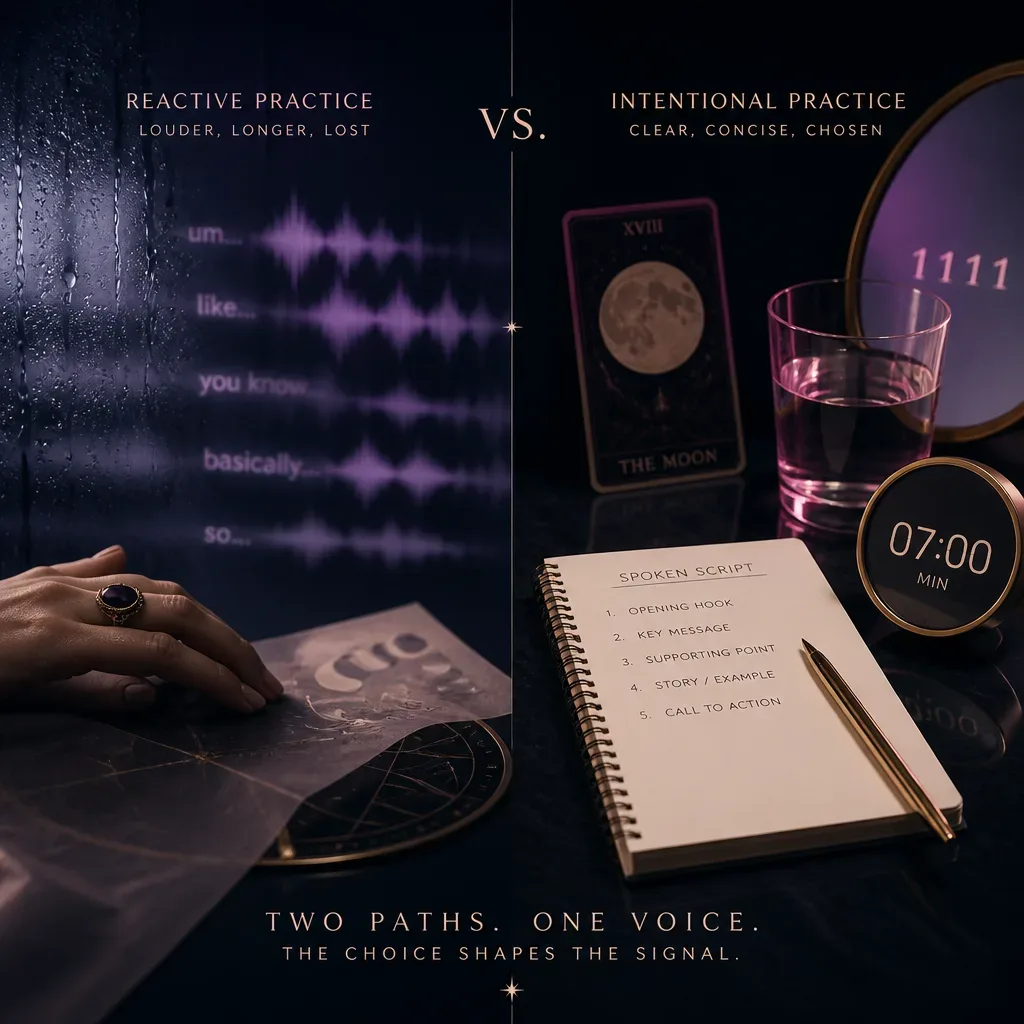
That difference sounds small until you try to track results. If I say, ‘I can lead this meeting without performing panic,’ I know what thought I am rehearsing. I can test it at 9:00 a.m. when the calendar invite lands. If the message is buried under rain sounds and theta tones, I am trusting a script I may not have reviewed.
Audible practice respects consent. You hear the sentence. You agree, resist, edit, or outgrow it. That friction is useful. Tara Brach has written and taught for decades about mindful awareness as a way of recognizing inner states without being ruled by them. Conscious language gives you that moment of recognition. Subliminals skip the mirror and head for the basement.
This is where the AYA Method becomes relevant. The AYA Method is a daily audio manifestation practice. Each day you listen to a short personalized recording — your Dream-Self Moment — narrated from the version of you who has already manifested the life you intend. Listening is the practice. Repetition is the work. The audio is the method.
The daily affirmation and Manifestation Board can complement that practice, but they are not the spine. The audio is. That matters because a voice carries timing, tone, and identity in a way a silent sentence often cannot. Dr. Andrew Huberman has often emphasized that repetition and attention shape nervous-system learning; whether we are speaking clinically or spiritually, repetition is not decorative. It is the mechanism.
A hidden message asks for faith in the producer. An audible message asks for participation from you.
For readers who use timing as a lens, Astrology and manifestation can add a seasonality frame: new moon for naming, full moon for witnessing, retrograde for review. Still, the audio practice is the daily appointment. The moon is punctuation, not management.
How can you test subliminals without fooling yourself?
You can test subliminals by tracking one specific outcome for a set period and refusing to count every coincidence as proof.
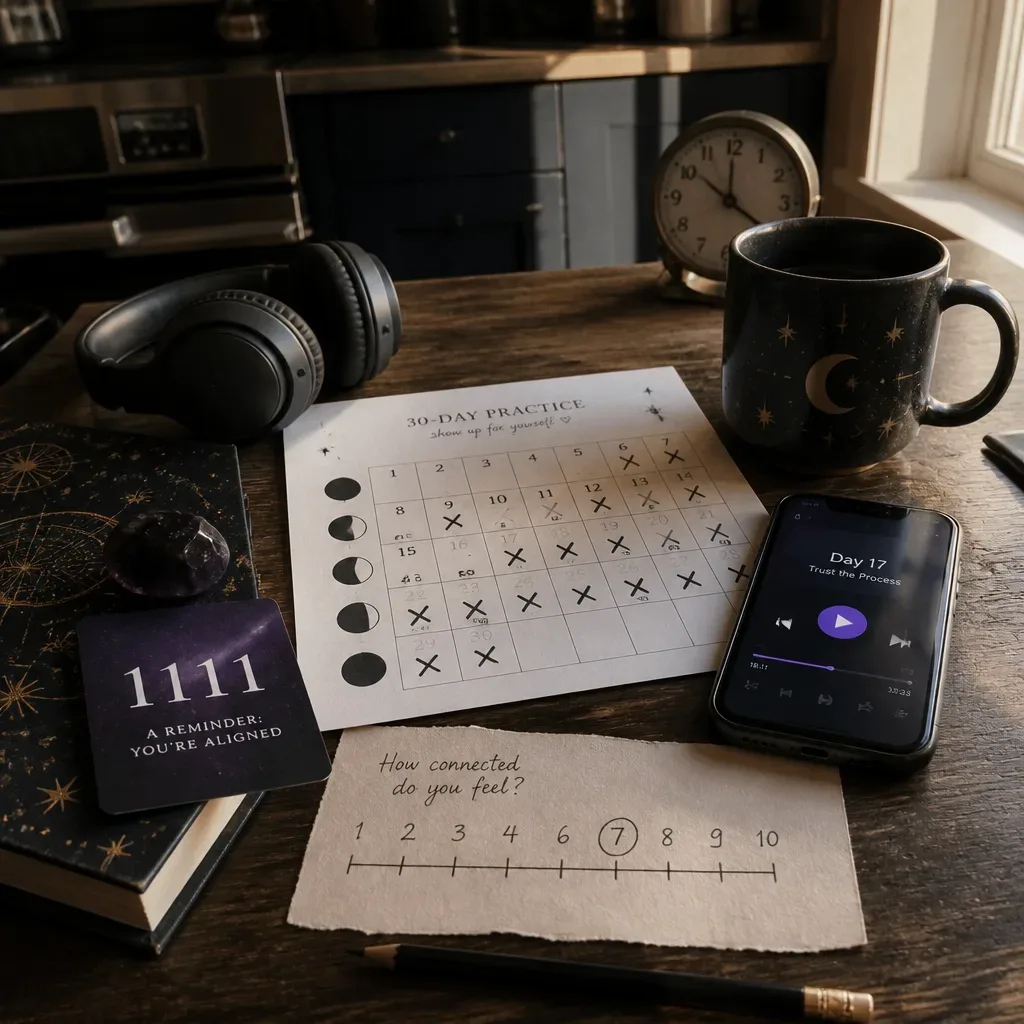
Make the test boring. Boring is honest. Pick one variable you can observe in 14 to 30 days. Do not choose ‘my whole life changes.’ Choose ‘I send 5 job pitches,’ ‘I sleep before 11:30 p.m. on weeknights,’ or ‘I feel less avoidant before studying, rated 1 to 10.’ The tighter the measure, the cleaner the signal.
Use a baseline. For 7 days, track the behavior before starting the subliminal. Then listen for 14 or 21 days. Keep the volume safe. The World Health Organization has warned that unsafe listening practices can put over 1 billion young people at risk of hearing loss, so do not blast a track because a forum said louder means faster.
Here is a simple test:
- Pick one subliminal with a clear, written script if available.
- Track one behavior or rating for 7 days before listening.
- Listen at the same time daily for 14 to 30 days.
- Keep sleep, caffeine, and other practices noted in a sentence.
- Review numbers, not just feelings, at the end.
- Stop if the practice increases anxiety, obsession, or compulsive checking.
You can also compare it with an audible practice. Spend 14 days with subliminals, take 3 days off, then spend 14 days with a spoken recording or affirmation practice. This is not a clinical trial, but it is better than letting TikTok, Reddit, or a comment section grade your nervous system.
The number matters less than the pattern. If your confidence rating rises from 4 to 6, and you also take 3 concrete actions, that is useful. If your rating rises but your behavior stays frozen, the practice may be soothing you without moving you. Sometimes soothing is the point. Just name it correctly.
For a broader map of intention, identity, and repetition, keep the Manifestation pillar open beside your notes. The cleanest practice is the one you can repeat without lying to yourself.
When is an audible alternative better than subliminals?
An audible alternative is better when you want clarity, consent, memory, and a practice you can connect to action.
I am a mother with a calendar that behaves like a prank. I do not have unlimited quiet. Some mornings I get 6 minutes, sometimes 90 seconds in a parked car, sometimes a child asking for toast while I am trying to become a person. Hidden audio is too slippery for those conditions. I need to hear the sentence that is asking to shape my day.
This is where audible manifestation practice earns its keep. A Dream-Self Moment gives the brain a narrated future to rehearse. Joe Dispenza often speaks about mental rehearsal and identity as part of change; you do not have to accept every metaphysical claim to recognize that rehearsal affects readiness. Athletes have used imagery for decades, with sports psychology reviews often finding benefits when mental practice is paired with physical training.
Audible audio also leaves a memory trace. You can recall a line at 2:17 p.m. before the meeting. You can repeat it while washing a cup. You can notice resistance and edit the practice. A subliminal may be elegant in theory, but it gives you very little to hold when the room gets loud.
Use subliminals, if you use them, as optional atmosphere. Do not make them the authority. The authority is the pattern you repeat and the choices that follow.
A practical stack might look like this:
- Morning: listen to your personalized audio for 3 to 7 minutes.
- Midday: repeat one audible affirmation when the old identity gets loud.
- Evening: write one line of evidence from the day.
- Weekly: update the Manifestation Board if your aim has shifted.
The Affirmations pillar can help you choose language that does not sound like it was written by a billboard. And if your timing practice includes numbers, lunar cycles, or master-number dates, let Astrology and manifestation support the ritual without replacing the work.
The best audio does not bypass you. It brings you back on cue.
What should you believe before you press play tonight?
Believe that subliminals may nudge attention, but conscious repetition gives you a stronger relationship with your own change.
If a subliminal track calms you and does not make extravagant claims, there is no need to turn it into a courtroom. Use it lightly. But if you are waiting for hidden affirmations to do what a direct practice, a decision, a boundary, a pitch, or a conversation must do, the signal has become a hiding place.
The research is not anti-mystery. It is anti-overclaim. Greenwald’s 1991 tape study did not say humans are closed systems. It said commercial subliminal promises failed a specific test. Priming studies did not say cues are meaningless. They said context matters, need states matter, and effects are usually smaller than marketing wants them to be.
That is a very 11:11 lesson. The sign can arrive. You still have to answer it.
So ask better questions before pressing play:
- Can I read or hear the message being used?
- Is the claim specific enough to test in 30 days?
- Does this practice make me more present in my life?
- Am I taking action, or only collecting signals?
- Would I still trust this if no one online praised it?
For my own practice, I choose audible audio because I want the mirror lit. I want the future voice close enough to argue with. I want repetition I can witness. The hidden may have its place, but the spoken has a spine.
Keep the dial where you can hear it.