evening rituals
Stop Doomscrolling at Night With Dream-Self Audio
Stop doomscrolling at night with a 3-minute Dream-Self audio ritual that gives your nervous system a cleaner signal before sleep.
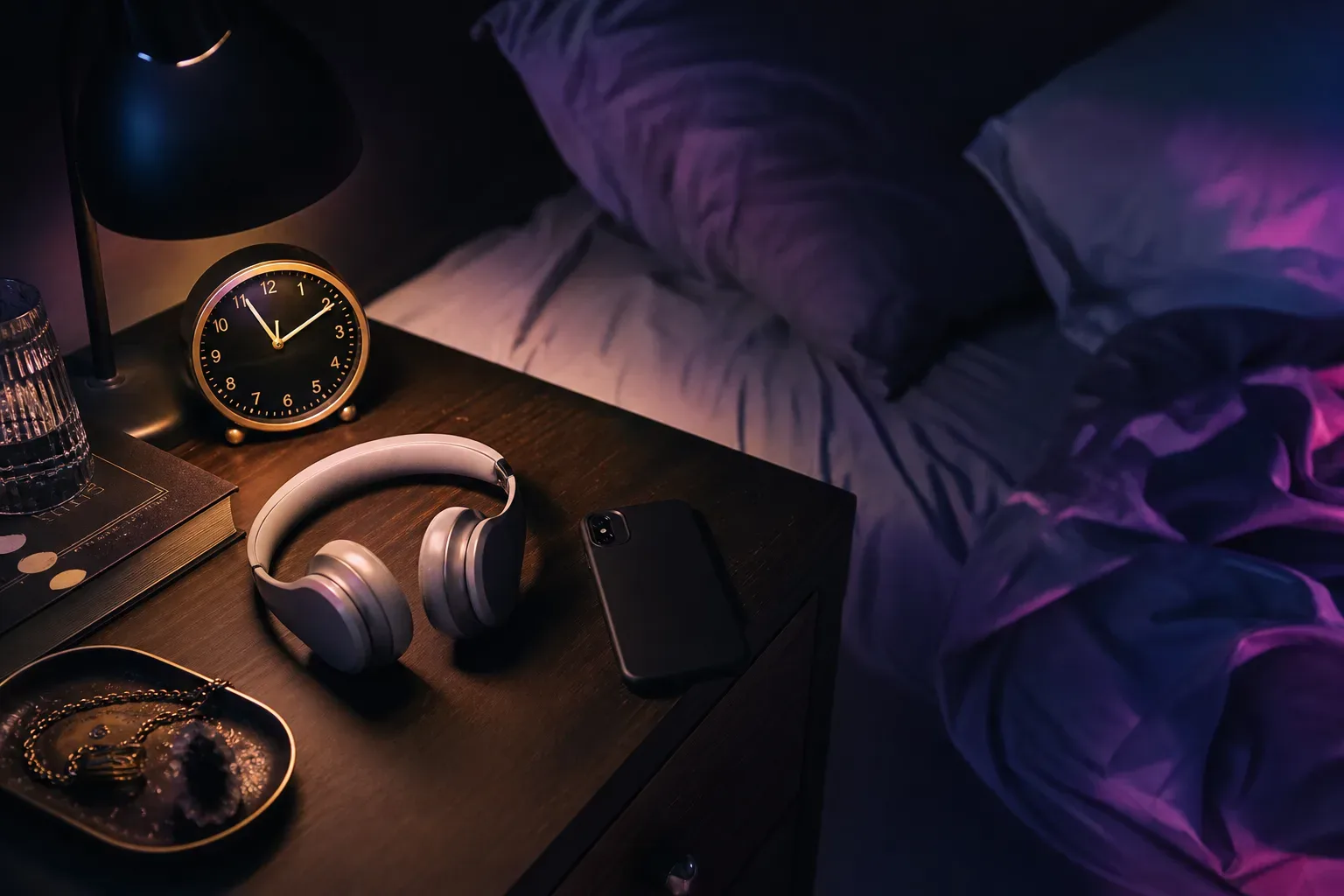
To stop doomscrolling at night, replace the open-ended feed with a 3-minute Dream-Self audio before the first scroll begins. The move is not moral. It is mechanical: shorten the cue, give your attention a cleaner signal, and let the phone become sound instead of a slot machine.
At 11:07, the room often lies. It says one headline, one message, one more minute. Then the dial slips to 12:22 and your nervous system has eaten a buffet of other people’s emergencies. Most people call that poor discipline. I call it a badly designed gate.
Why does doomscrolling get louder at night?
Doomscrolling gets louder at night because your brain is tired, your guardrails are lower, and the feed is built to remove natural stopping points.
The night scroll is not a character flaw. It is a collision between exhaustion and design. The American Academy of Sleep Medicine recommends that adults get at least 7 hours of sleep, while CDC data has repeatedly shown that roughly 1 in 3 U.S. adults report getting less than that. A tired brain does not become more philosophical at 11 p.m. It becomes easier to steer.
Social platforms know the hour. Infinite scroll, autoplay, red notification dots, and algorithmic novelty all exploit the same human preference for uncertain reward. B.F. Skinner described variable reward schedules in the 20th century; phones simply put the lever in your palm. One clip is boring. The next is alarming. The third gives you a small hit of being informed. The cycle arrives on cue.
The problem is also biological. Dr. Andrew Huberman has often warned that bright light exposure late at night can disrupt sleep timing, and laboratory research has shown that short-wavelength blue light can suppress melatonin more than dimmer, warmer light. The exact impact depends on brightness, distance, and duration, but 30 minutes of close-range phone use is not neutral for many sleepers.
Here is the cleaner sentence: your attention needs an ending before your anxiety invents one. A 3-minute audio gives the evening a boundary small enough to use when you have no heroic self-control left.
If you want the wider map, start with the Manifestation pillar. This ritual sits inside that practice, but it begins with something brutally practical: the thumb has to stop moving.
What is a 3-minute Dream-Self audio?
A 3-minute Dream-Self audio is a short personalized recording that lets your future self become the final voice your mind hears before sleep.
In the AYA Method, the definition is precise: The AYA Method is a daily audio manifestation practice. Each day you listen to a short personalized recording, your Dream-Self Moment, narrated from the version of you who has already manifested the life you intend. Listening is the practice. Repetition is the work. The audio is the method.
That matters because bedtime does not need another content category. It needs a different relationship to input. A podcast can keep your mind busy for 47 minutes. A meditation can be useful, if it is not so vague that you abandon it. The Dream-Self audio is brief by design. Three minutes is long enough to interrupt the feed and short enough to survive a real house with dishes, deadlines, and a child who suddenly needs water.
I am suspicious of aspirational language. Twelve years in advertising will do that. But I trust repeated cues. Behavioral scientists often describe habit as a loop: cue, routine, reward. Charles Duhigg popularized that model in 2012, and while habit research has grown more nuanced since then, the basic pattern still holds. The phone at bedtime is the cue. Scrolling is the routine. Relief, outrage, or numbness is the reward.
The Dream-Self audio does not argue with the loop. It replaces the routine. Same cue. Different action. Different signal.
Use this comparison when the night starts negotiating:
| Night input | Time boundary | Nervous system message | Likely result |
|---|---|---|---|
| News feed | None | Stay alert | More checking |
| Short video app | None | Keep sampling | Lost time |
| Podcast episode | 20–60 minutes | Follow the thread | Delayed sleep |
| Dream-Self audio | 3 minutes | Return to self | Cleaner closure |
The feed keeps asking what else is wrong. The audio asks who you are becoming when the noise stops.
How do you set up the 3-minute ritual?
Set up the ritual before you are tired, because bedtime is the worst possible time to design bedtime.
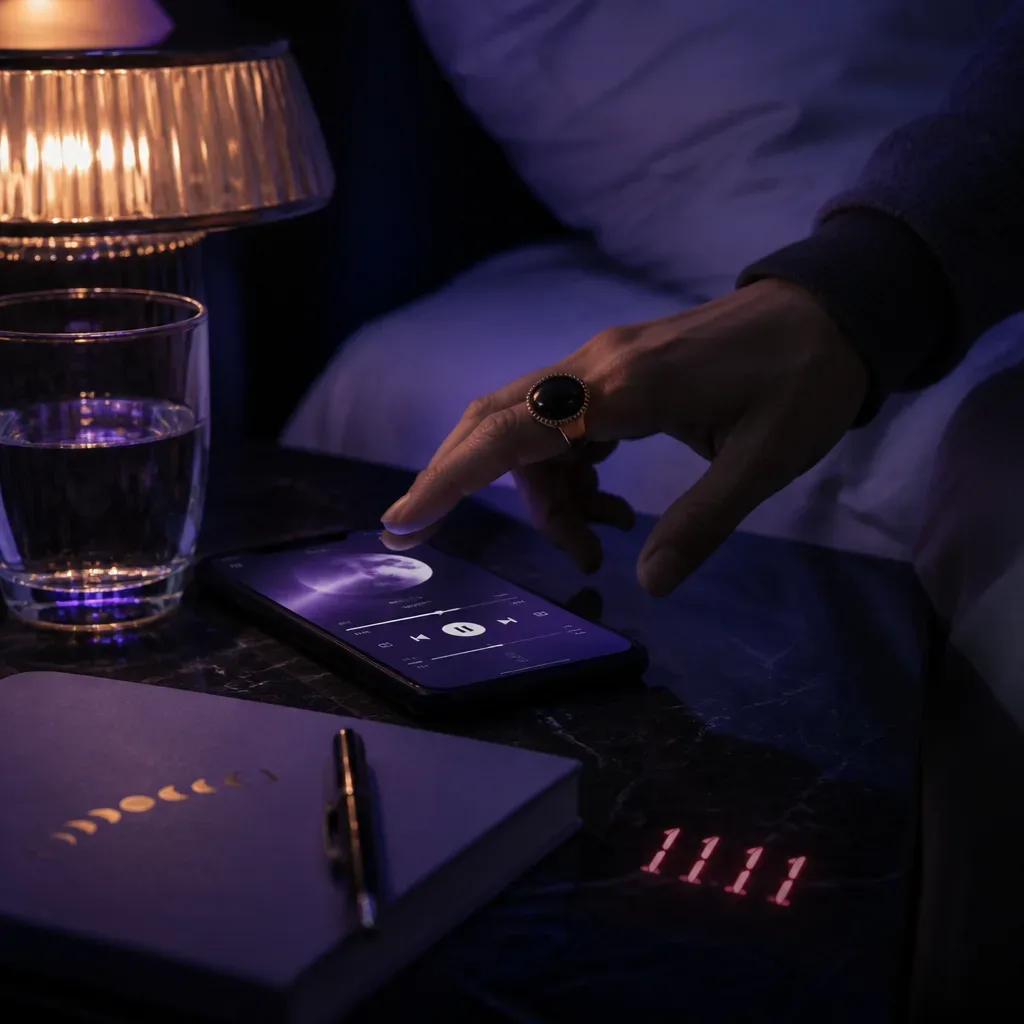
The setup takes less than 5 minutes once, then 3 minutes each night. BJ Fogg’s behavior model argues that behavior happens when motivation, ability, and a prompt meet at the same moment. At night, motivation is unreliable. Ability must become almost insultingly easy. The prompt has to be visible before the scroll begins.
Here is the exact setup I use when the day has been loud:
- Choose the danger window. Mine is usually 10:18 to 10:42 p.m., after the house goes quiet.
- Queue the Dream-Self audio before brushing teeth.
- Put the phone face down on the nightstand or across the room.
- Press play before opening any social app.
- When the audio ends, turn off the lamp or write one sentence.
Notice what is missing. No dramatic digital detox. No twenty-step evening ceremony. No personality transplant. The ritual works because it removes one fork in the road. If the phone is already open to the audio, the feed has to work harder to win.
A useful rule: do not make your future exhausted self choose from a menu. Menus are where habits sneak back in. A 2023 review in sleep medicine literature noted that pre-sleep technology use is commonly associated with later bedtimes and poorer sleep outcomes, though causality varies by study design. The practical takeaway is still sharp: the closer the screen is to sleep, the more intentional the container must be.
You can support the audio with one written line from the Affirmations pillar, but keep the hierarchy clean. The audio is the method. The affirmation is a small witness. If you write, write something plain: “I am done feeding the fear loop tonight.”
A ritual that only works on perfect nights is not a ritual. It is decor. Build the version that works when you are annoyed, late, and half-ready to betray yourself for one more headline.
What should the audio actually say?
The audio should speak from your chosen future in concrete, believable language, not in glittering slogans your body rejects.
Good Dream-Self language sounds like recognition. It names the life you are practicing toward with enough detail that the nervous system can picture it. Joe Dispenza often writes about rehearsing a future state until the body learns it emotionally; you do not have to accept every claim around that work to see the behavioral value of mental rehearsal. Athletes have used imagery training for decades, and studies in sport psychology have found performance benefits when imagery is specific and repeated.
At night, specificity is mercy. “I am calm” may be true enough, but it can feel like a lie at 11:33 p.m. after reading six alarming posts. Better: “I put the phone down before the spiral. I let tomorrow receive me rested. I do not need to solve the whole world from this pillow.”
Use these ingredients:
- A present-tense identity: “I am someone who closes the day cleanly.”
- A physical cue: “My hand releases the phone.”
- A future scene: “I wake before the alarm with my mind clear.”
- A boundary: “I can care without consuming every update.”
- A return: “The room is quiet, and I am back in it.”
This is also where astrology can be useful as timing language, not as an excuse. If a full moon makes you restless, name the restlessness and keep the ritual. If Mercury retrograde becomes the reason you scroll until 1:11, the symbol has started driving the car. For a grounded take, see Astrology and manifestation.
Three minutes is enough for roughly 390 to 450 spoken words at a calm pace. That limit is a gift. It forces the audio to stop performing and start pointing. The most persuasive future self is not louder than your fear. She is steadier.
How do you stop the scroll without making it a punishment?
You stop the scroll by removing the endless part, not by treating your curiosity as a crime.
Punishment backfires because the scroll is often meeting a need. It may be giving you connection, threat monitoring, distraction, or the strange comfort of knowing you are not the only person awake. Pew Research Center has reported for years that large majorities of adults get news from digital devices at least sometimes. The phone is not just entertainment. It is mailbox, newspaper, camera, calendar, and family line.
So do not frame the ritual as “no phone.” Frame it as “no bottomless feed after the gate closes.” That distinction keeps the practice humane. Parents may need emergency access. Freelancers may need calendar checks. Caregivers may sleep with the ringer on. A clean ritual does not require pretending life is simpler than it is.
Use boundaries that preserve function:
- Keep calls and essential messages available.
- Move social apps off the home screen after 9 p.m.
- Use grayscale if color is part of the pull.
- Charge the phone outside arm’s reach when possible.
- Put the Dream-Self audio where it takes one tap.
Apple introduced Screen Time in 2018, and Android has offered Digital Wellbeing tools since the same era. Use them if they help, but do not outsource the whole ritual to a setting you will override while tired. Settings are fences. Audio is the path you actually walk.
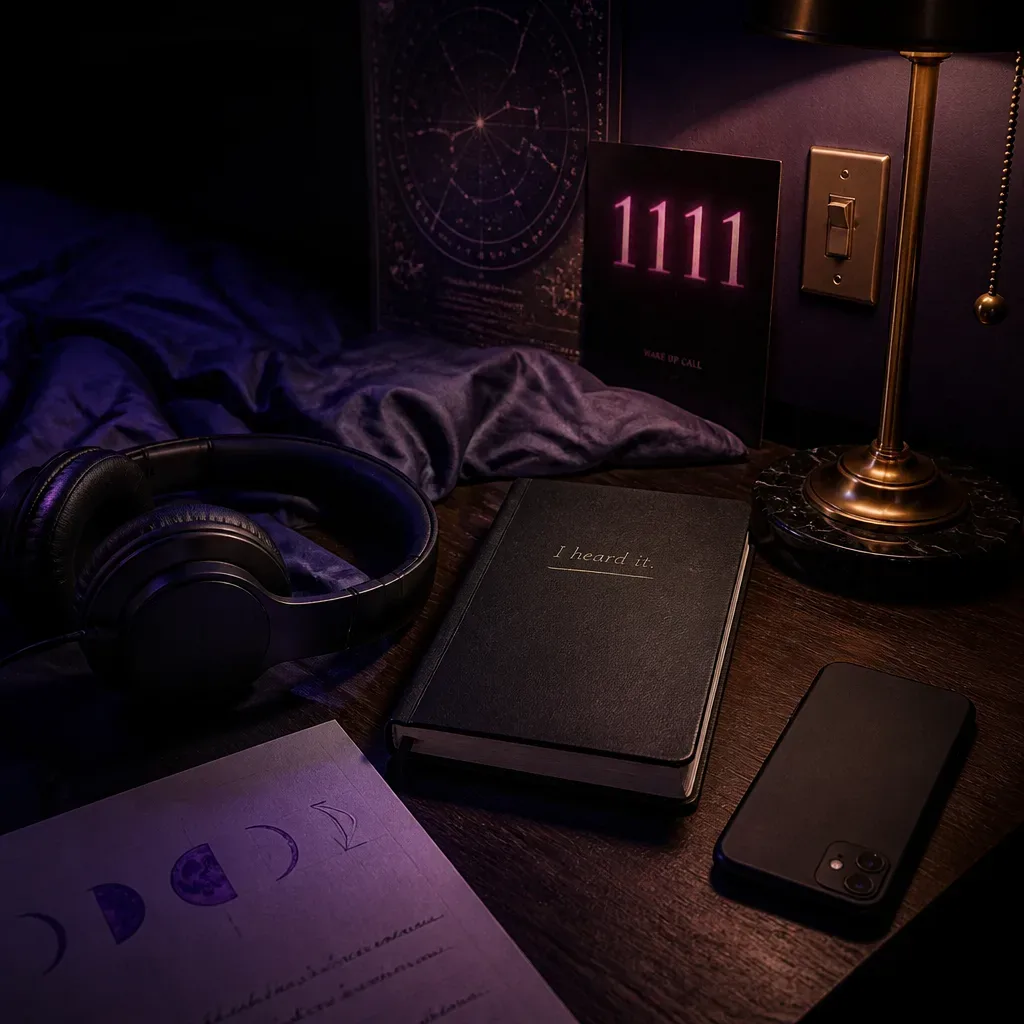
A tiny script can help when the hand reaches anyway: “Not the feed. The file.” Say it once. Press play. Let the first 10 seconds do the work. The first 10 seconds are the hinge; after that, the room often changes its mind.
What if you break the streak?
If you break the streak, restart the next night without turning the lapse into a story about who you are.
Streaks are useful until they become tyrants. A 2009 study by Phillippa Lally and colleagues at University College London found that habit formation took an average of 66 days, with wide variation depending on the behavior and person. Missing one day did not erase the habit in that research. The return mattered more than the perfect line.
This is where I get practical because I have the receipts. I have played my audio in a parked car. I have played it with a child coughing in the next room. I have also ignored it and scrolled through a thread that gave me nothing except a tighter jaw. The next night still counted.
Use a 3-level reset instead of a shame spiral:
- Full ritual: phone down, audio, lamp off, one written line.
- Medium ritual: audio only, eyes closed, no writing.
- Minimum ritual: first 60 seconds of audio before any feed.
The minimum ritual is not fake. It preserves identity. James Clear popularized the idea that habits are votes for the kind of person you are becoming; the phrase spread because it names something real. One small vote does not decide the election. Repeated votes change the room.
If you want to pair the evening ritual with broader practice, keep it connected to the Manifestation pillar and the audio-first structure of the AYA Method. The Manifestation Board can remind you what matters. A daily affirmation can sharpen one sentence. But when the thumb is already hovering, audio wins because it requires the least explanation.
Shame is a terrible sleep aid. Return is better.
How will you know the ritual is working?
You will know it is working when the scroll shortens, sleep starts earlier, and your last input feels chosen instead of stolen.
Track only 3 numbers for 7 nights: the time you first wanted to scroll, the time you pressed play, and the time the phone went down. That is enough data. Wearables can add sleep latency and wake time, but do not turn the ritual into another dashboard unless numbers calm you. The National Sleep Foundation has often noted that adults typically need 7 to 9 hours of sleep; the goal here is to protect the front edge of that window.
Here is a simple tracker:
| Night | Scroll urge time | Audio start | Phone down | One-word state |
|---|---|---|---|---|
| 1 | 10:26 | 10:29 | 10:33 | wired |
| 2 | 10:14 | 10:15 | 10:19 | quieter |
| 3 | 10:41 | 10:58 | 11:22 | snagged |
| 4 | 10:08 | 10:09 | 10:13 | clear |
The pattern matters more than any single night. If the urge still appears but you press play faster, the ritual is working. If you scroll for 12 minutes instead of 52, the ritual is working. If you notice the exact moment the feed starts selling you urgency, the mirror has arrived.
For some readers, the number 11:11 will become a little signal. Not magic on command. Just a witness. A master number has long been associated with intuition in modern numerology, but the useful part is attention: you noticed the moment before it swallowed you.
Keep the practice plain for two weeks. Fourteen nights is enough to see whether the dial is moving. The room does not need drama. It needs a repeated cue, a short recording, and the courage to let the day end.
Press play before the feed names the night for you.