sleep hypnosis affirmations
Self Hypnosis for Sleep: 3-Minute Dream-Self Audio
Use self hypnosis for sleep with a 3-minute Dream-Self audio, a simple nightly cue that calms the body and rehearses rest.
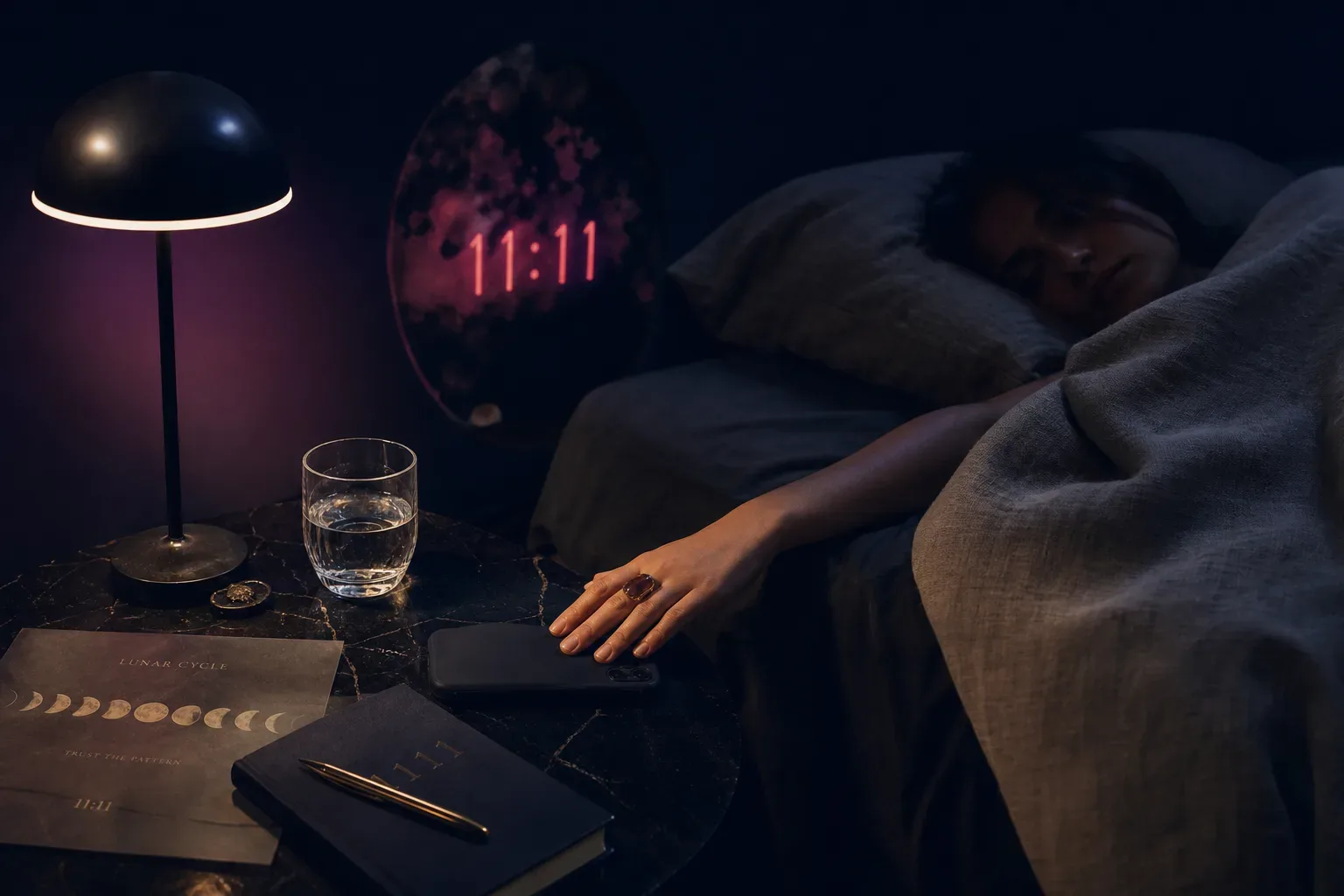
Self hypnosis for sleep works when you give the mind a short, repeated script at the exact moment the body is ready to power down. A 3-minute Dream-Self audio can become that signal: focused attention, future-safe language, and a familiar voice telling the nervous system the day is done.
What is self hypnosis for sleep, really?
Self hypnosis for sleep is a focused listening practice that uses attention, suggestion, and repetition to help the body shift toward rest.
The clock says 11:11, then 11:14, then 11:22. You are not awake because of one grand crisis. You are awake because the mind has found a second shift. It is reviewing a message from 3:07 p.m., tomorrow’s calendar, the strange tone in someone’s voice. Sleep did not leave. The dial is simply not lined up.
Hypnosis sounds dramatic because stage acts got there first. Clinically, it is quieter. The American Psychological Association describes hypnosis as a state of focused attention and reduced peripheral awareness, often with increased response to suggestion. For sleep, the suggestion is not a command. It is a cue: soften the jaw, release the day, let the body know it is no longer on duty.
The American Academy of Sleep Medicine and Sleep Research Society recommend at least 7 hours of sleep for most adults. The CDC has reported that roughly 1 in 3 U.S. adults do not get enough sleep. That number matters because a tired brain becomes suggestible in all the wrong directions. It believes the 2 a.m. courtroom. It mistakes rumination for preparation.
A good sleep hypnosis audio gives the mind a better assignment. Not blankness. Not forced calm. A better assignment.
Sleep begins faster when the mind is given something small enough to hold and safe enough to release.
This is where a Dream-Self audio earns its place. Instead of repeating generic lines, you hear yourself narrated from the version of you who already sleeps steadily. It is not fantasy. It is rehearsal. Athletes have used mental rehearsal for decades; a 2017 review in Psychology of Sport and Exercise found imagery interventions can support performance when paired with practice. At night, the performance is rest.
If you already work with the AYA Method, the structure will feel familiar: a short personalized recording, listened to daily, narrated from the version of you who has already claimed the intended life. The audio is the method. At night, the life you intend begins with a body that trusts the dark.
Why use a 3-minute Dream-Self audio instead of a long track?
A 3-minute audio works because it is short enough to repeat nightly and long enough to move the body through a complete sleep cue.
Long tracks can be beautiful. They can also become a project. At 10:43 p.m., after dishes, messages, and the small archaeology of finding the charger, your practice needs to be humble. Three minutes is not a downgrade. Three minutes is a gate.
Sleep medicine likes consistency for a reason. Cognitive behavioral therapy for insomnia, often called CBT-I, uses repeated sleep cues, stimulus control, and routine. The Mayo Clinic and the American College of Physicians both point to CBT-I as a first-line treatment for chronic insomnia. A short audio does not replace clinical care, but it borrows one useful principle: the body learns from repetition in context.
A 3-minute Dream-Self audio has enough room for 4 movements:
- Arrival: one sentence that names the room and the body.
- Downshift: two or three cues for breath, jaw, shoulders, belly.
- Identity: a simple future-self statement about being a person who sleeps.
- Release: a closing line that gives the mind permission to stop solving.
That is the whole recipe. My grandmother would have approved. She did not measure cinnamon by the tablespoon when her hand already knew the dish. Precision is not always more ingredients. Precision is knowing what the hour can hold.
A 2014 study in the journal Sleep by Cordi and colleagues found that hypnotic suggestions increased slow-wave sleep by about 81% in highly suggestible young women. That does not mean everyone gets the same number. It does mean the sleeping brain can respond to well-timed suggestion. Useful, when the night is being subtle.
Here is the cleaner comparison:
| Practice | Best use | Time | Risk at bedtime |
|---|---|---|---|
| Long guided meditation | Deep relaxation | 20 to 45 minutes | Too much content |
| White noise | Sound masking | All night | No identity rehearsal |
| Generic affirmations | Thought replacement | 1 to 5 minutes | Can feel false |
| 3-minute Dream-Self audio | Sleep cue plus self-suggestion | 3 minutes | Needs consistency |
For broader context on intention practice, the Manifestation pillar explains how repeated attention shapes what we notice, choose, and rehearse. Sleep is not separate from that. It is the nightly return of the whole system.
How should you prepare the room before pressing play?
Prepare the room by making the same small changes every night so the audio arrives as part of a recognizable sleep sequence.
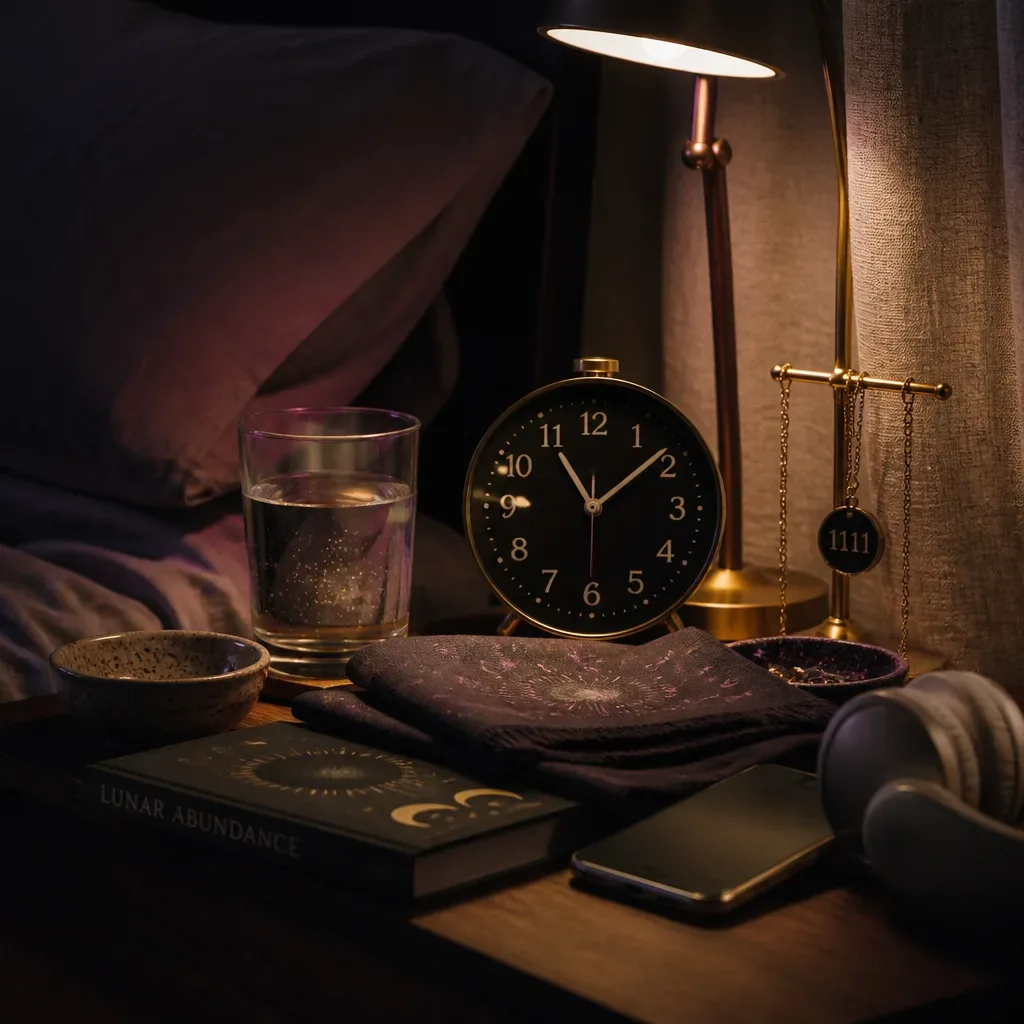
The room does not need to look like a spa. It needs fewer arguments. Light, temperature, noise, and the phone all vote in the final hour. The National Sleep Foundation often cites a bedroom temperature near 60 to 67 degrees Fahrenheit as helpful for many sleepers. Not everyone has that kind of control, but even a fan, lighter blanket, or cracked window can tell the body the day has tilted.
Start with light. Bright light in the evening can delay melatonin timing, according to circadian research from Harvard and other sleep labs. Blue light is not the villain in a cape; intensity and timing matter too. Dim the room 30 minutes before the audio if you can. If you cannot, dim one lamp. The nervous system respects partial honesty.
Then remove decision points. Put water beside the bed. Set the alarm before listening. Place the phone face-down or across the room if the audio can still play. If your phone becomes a little casino at night, download the track or use airplane mode. The 2023 Pew Research Center reports that 97% of U.S. adults own a cellphone, which means nearly every bedroom has a tiny bright gate to elsewhere.
Use a cue that happens nightly:
- brushing your teeth
- washing your face
- setting a glass of water down
- turning off the kitchen light
- touching the same blanket or pillow
- adding one line to a notebook
I listen with my phone face-down on the counter when I am still closing the kitchen. Some nights there is coriander under my fingernails. Some nights the sink is not finished. The rule is not perfection. The rule is repetition.
If you use a daily affirmation, keep it as a complement. One line before the audio is enough. The Affirmations pillar can help you write one that does not pick a fight with your nervous system. At night, believable beats grand.
What are the exact steps for a 3-minute sleep self-hypnosis practice?
The exact practice is to write one short script, record it slowly, and listen to it at the same sleep cue for at least 7 nights.
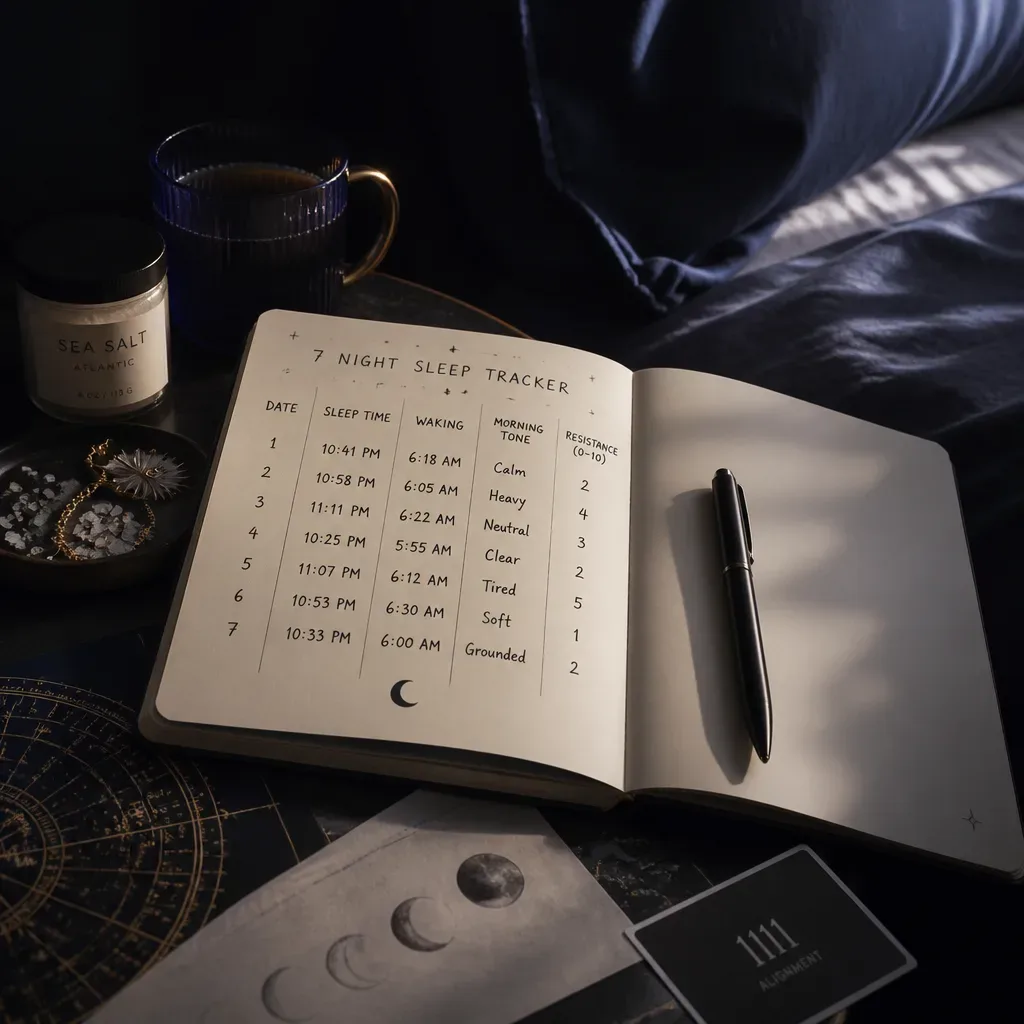
Seven nights is not mystical, though the number does have a nice old kitchen logic to it. It is long enough to see patterns without turning the practice into a verdict. Many sleep diaries used in CBT-I track sleep over 1 to 2 weeks because one night can lie. Three nights can be noisy. A week begins to speak.
Use this sequence.
- Name the sleep identity. Write one sentence: “I am the version of me who lets night do its work.” Make it simple. Do not include your career, bank account, family repair plan, or entire destiny.
- Write the body cues. Choose 3 places: jaw, shoulders, belly. Specific body cues work better than abstract calm.
- Add one sensory image. A cool pillow. A dark blue room. The weight of a blanket. The smell of clean cotton or cedar.
- Record for 3 minutes. Speak at about 100 to 120 words per minute, slower than a normal conversation. Leave silence between sentences.
- Listen once. Not five times. Once tells the mind the gate has opened and closed.
- Do not grade the night at 2 a.m. If you wake, repeat the final line silently and let the body stay horizontal.
A sample structure might look like this:
I am here. The room is dark enough. My jaw softens.
My shoulders release the last work of the day.
I am the version of me who sleeps without proving anything.
My future is not built by worrying in bed.
The day is complete. The body can take it from here.
That script is intentionally plain. The sleeping mind does not need fireworks. It needs the right spoon, the right salt, the right heat.
Dr. Andrew Huberman has popularized NSDR, or non-sleep deep rest, as a way to teach the body downshifting through guided protocols. Self-hypnosis is not identical to NSDR, but both use voice, attention, and reduced effort. The signal is similar: stop pushing the river. Witness the body returning.
The nighttime self is not lazy; it is the part of you that knows repair has a schedule.
If you want the full daily manifestation frame outside bedtime, read the AYA Method as the spine: listening to a short personalized Dream-Self Moment, every day, narrated from the version of you who has already arrived. For sleep, you are applying that spine to one narrow gate: the final 3 minutes before rest.
What should the Dream-Self audio actually say?
The audio should say what your nervous system can believe at night: present-tense safety, embodied release, and one identity that does not sound like a performance.
Bad sleep scripts try to bully the mind. “I fall asleep instantly.” If you do not, the line turns into evidence against you. Better: “I give my body the conditions for sleep.” That is honest. It keeps the door open without demanding a miracle on cue.
The strongest Dream-Self sleep language has 3 qualities. It is sensory, specific, and low-drama. You are not auditioning for sainthood. You are letting the future self speak like someone who has nothing to sell.
Use these sentence types:
- Body truth: “My tongue rests. My eyes are heavy. My hands unclench.”
- Room truth: “The room is dim. The bed is holding me. The night is allowed to be quiet.”
- Identity truth: “I am someone who returns to sleep without making a story.”
- Release truth: “Nothing important needs to be solved in the next 3 minutes.”
The identity line matters. Research on implementation intentions, led by psychologist Peter Gollwitzer, has shown that “if-then” planning can improve follow-through across behaviors. Night language can borrow that architecture gently: “If I wake, then I soften my jaw and return to the last line.” Not a battle plan. A cue.
You can also add one symbolic detail if it is yours. A moon phase. A bowl on the bedside table. The number 11 if it keeps arriving in your day. Numerology treats 11, 22, and 33 as master numbers, but the useful part is attention. A number becomes meaningful when it makes you pause long enough to choose your next action.
That is also why astrology and manifestation can be useful when handled with discipline. A lunar cycle gives the mind a calendar. A sleep audio gives the body a nightly cue. The sky may mark the season; the practice still happens in the room.
Avoid these at bedtime:
- promises you do not believe
- financial goals in sleep language
- revenge fantasies disguised as confidence
- long lists of people who must change
- urgent spiritual language
- anything that makes the body brace
A good line tastes clean. Like broth that has been skimmed properly.
How do you know whether the practice is working?
You know it is working when sleep becomes less negotiated, even before every night becomes perfect.
Do not measure only the minute you fall asleep. Sleep latency matters, but it is not the whole story. The National Institutes of Health notes that insomnia can involve trouble falling asleep, staying asleep, or waking too early. A practice may first show up as less dread before bed, fewer phone checks, or a softer reaction when you wake at 3:16.
Track 4 signals for 7 nights:
- Time to sleep: estimate in 10-minute bands, not exact minutes.
- Night waking: count awakenings you remember.
- Morning tone: name it in one word: clear, heavy, tender, sharp.
- Resistance: rate how hard it felt to press play from 1 to 5.
This is data, not a diary trial. If you cook beans, you do not yell at the pot every 4 minutes because they are not soft yet. You check the heat, the water, the salt, and the time. Sleep asks for the same dignity.
In small clinical studies, hypnosis has shown promise for sleep, pain, and anxiety, but results depend on suggestibility, delivery, and consistency. A 2018 review in the Journal of Clinical Sleep Medicine noted that mind-body approaches can help some insomnia symptoms, though evidence quality varies by method. Translation: useful, not magic.
The signal is not that every night becomes perfect. The signal is that you stop treating every imperfect night as a prophecy.
If after 2 weeks your sleep is worse, your anxiety spikes, or you are using the audio to avoid medical symptoms, change course. Snoring, gasping, restless legs, panic attacks, and depression deserve qualified care. The practice is a support, not a substitute for diagnosis.
You can pair the data with broader intention work through the Manifestation pillar, especially if your sleep trouble is tied to a larger season of change. But keep the night practice narrow. The bed is not the boardroom.
What mistakes make sleep self-hypnosis less effective?
The most common mistakes are making the audio too ambitious, changing it too often, and using it while still feeding the mind stimulation.
The first mistake is writing a script for your entire life. Night is not the hour for a 12-point reinvention plan. The sleeping body does not want your five-year vision. It wants permission to unclench. Keep the Dream-Self focused on sleep only. One room. One body. One identity.
The second mistake is editing the audio every night. Repetition is the point. In habit research, context stability is a known driver of automaticity; a 2009 study by Phillippa Lally and colleagues in the European Journal of Social Psychology found habits took a median of 66 days to become automatic, with wide variation. You do not need 66 perfect nights. You do need enough sameness for the cue to become recognizable.
The third mistake is listening while scrolling. The nervous system notices mixed messages. A soft voice says, “release the day,” while the thumb says, “check one more thing.” The thumb usually wins because novelty is loud. Put the phone face-down. Better yet, start the audio, lock the screen, and let the room go visually quiet.
The fourth mistake is confusing affirmation with argument. If a line makes you flinch, soften it. “I always sleep beautifully” may feel false. “I am learning the conditions that help me sleep” may land. The Affirmations pillar is useful here because the best lines are not inflated. They are clean enough to repeat.
The fifth mistake is expecting the audio to sedate you. It is not anesthesia. It is a relationship with the threshold. Some nights you will fall asleep during the second minute. Some nights you will hear the final line and still be awake. The practice is still teaching the body what happens next.
A ritual is not a superstition when it changes your behavior on schedule.
If the same number keeps appearing at night, 10:10, 11:11, 3:33, let it be a witness, not a command. Name it. Breathe. Return to the line. Synchronicity is most useful when it brings you back to the practice instead of pulling you into analysis.
Tonight, make the audio small enough to trust.